What Is StrikeBit AI (STRIKE)?




StrikeBit AI positions itself as more than just another crypto project. It’s a Modular Agent Protocol (MAP) . The infrastructure aims to let you build, scale, and integrate intelligent multi-agent systems. Instead of a single bot, think of a network of AI agents collaborating on complex tasks.
For traders looking for new AI agent tokens with real utility, StrikeBit operates across major networks: Base, TON, Arbitrum, and SEI. The shift from simple DeFi to agentic finance is here—AI now handles the trading, analytics, and execution. But is the tech enough to hold its price?
What Is StrikeBit AI (STRIKE) Token?
STRIKE is the native utility token of the StrikeBit AI ecosystem. Current price: $0.03248. Market cap: $6.81 million. The 24-hour volume ($29.58M) is 433% of that cap—heavy speculation.
The token hit an ATH of $0.144 on April 20, 2026, just 18 hours ago, then dropped 77%. Its all-time low was $0.005525 in March 2026, marking a 487% rally from bottom to peak. Currently, STRIKE has about 4,570 holders.
What Happened to STRIKE Crypto?
Timing is everything. STRIKE hit an all-time high of $0.144 on April 20, 2026. Eighteen hours later, it was down 77%. That’s not a dip; it’s a liquidity flush.
Currently, STRIKE trades around $0.03248. The market cap sits at $6.8 million, but the fully diluted valuation (FDV) tells a scarier story: $65 million. Why the gap? Supply. Only 10.5% (209.9M) of the 2 billion total supply is floating. The rest unlocks later. If you’re searching for STRIKE crypto price prediction data, remember this: demand must absorb 10x more tokens eventually.
How StrikeBit AI Agent Works
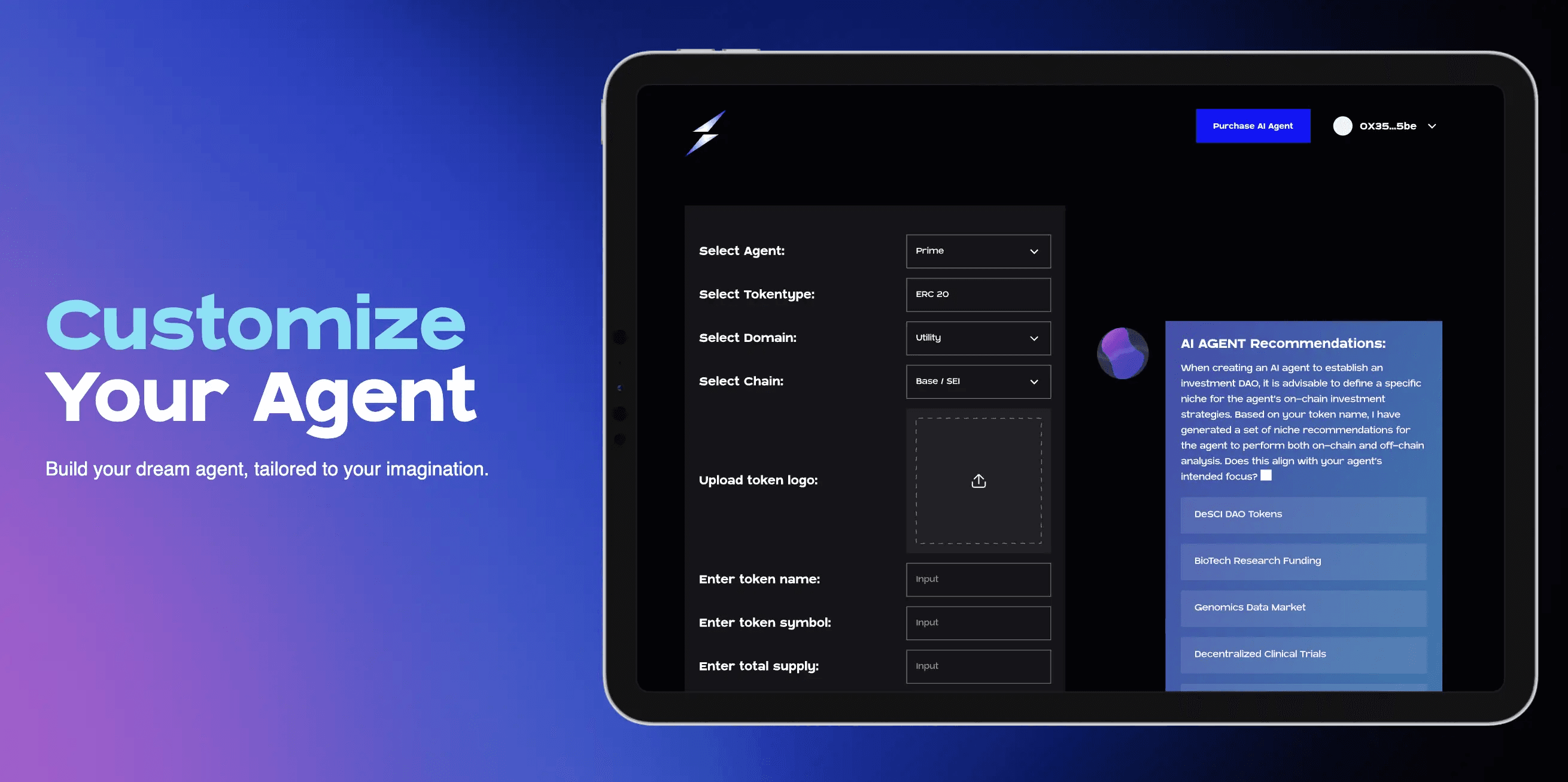
The protocol offers three tiers of Radiant AI agents. These are marketed as “the first passive income earning agents” on blockchain.
- CORE Tier: Market insights and alerts. Basic stuff.
- PRIME Tier: Advanced analytics and risk management.
- ELITE Tier: Full automation, sentiment analysis, and strategy execution.
The StrikeBit AI passive income narrative comes from owning these agents. The system claims you earn STRIKE tokens just by running them. But be critical—high earnings usually require the ELITE tier, which likely requires a significant token stake or purchase. Always check the official dApp for the actual APR before aping in.
Why Multi-Chain Support Matters
Unlike older protocols stuck on Ethereum, StrikeBit embraces multi-chain AI agents. Base (Coinbase’s L2) offers low fees. TON brings in the Telegram-centric user base.
If you want to launch your own token via AI, StrikeBit allows creators to deploy through these Radiant agents. This lowers the barrier for community projects. However, with lower barriers comes higher competition. It’s easy to launch a token; it’s hard to make it liquid.
STRIK Tokenomics
Let’s talk about the STRIKE token supply.
- Total Supply: 2,000,000,000
- Circulating Supply: ~209,900,000 (10.5%)
- 24h Volume/Mcap Ratio: 433% (Extreme speculation)
A high volume relative to a small market cap means this is a trader’s paradise—and a holder’s nightmare. The current $6.8 million cap is volatile. For StrikeBit AI investment analysis, the bullish case is that the ecosystem grows fast enough to justify the 90% future dilution. The bearish case is that early investors dump on the liquidity.
Conclusion
StrikeBit AI (STRIKE) nails the narrative. Modular agents, passive income, and multi-chain support are hot topics. But the numbers don't lie—10.5% circulation and a 77% drop from ATH scream high risk.
For believers in agentic finance, this is a low-cap moonshot. For the cautious, the FDV is a red flag. If you trade it, treat it as a momentum play, not a long-term stake until the unlock schedule is clearer.
FAQ
Q1: Is StrikeBit AI (STRIKE) a good investment?
It depends on your risk profile. STRIKE offers high potential due to its Modular Agent Protocol and passive income claims, but it carries extreme risk. Only 10.5% of the total 2 billion supply is circulating, which creates massive sell-pressure risk from future token unlocks .
Q2: How does the StrikeBit AI passive income work?
Users earn STRIKE tokens by owning and operating Radiant AI agents (CORE, PRIME, ELITE tiers). The ELITE tier provides automated trading and strategy execution to generate yield, though actual returns depend on market conditions and agent performance.
Q3: What blockchains support the StrikeBit Modular Agent Protocol?
StrikeBit AI is live on Base, TON, Arbitrum, and SEI. This multi-chain strategy allows users to deploy AI agents on their preferred network without being locked into a single ecosystem.
Q4: What is the total supply of STRIKE token?
A: The total supply is 2 billion STRIKE. Currently, only 209.9 million (10.5%) is in circulation. The remaining supply will be released over time, which could lead to price dilution if demand does not keep pace.