
What is Ouroboros (ORX)? A Complete Guide to the Revenue-Backed DeFi Token

In the crowded landscape of decentralized finance, most tokens promise utility but deliver little more than hype. Ouroboros (ORX) stands apart. It is not a stablecoin, nor is it a simple governance token. Instead, ORX is a revenue-backed value-accrual token designed to capture and redistribute real yield generated by the Ouroboros Protocol.
If you are searching for "what is Ouroboros (ORX)" , "how to buy Ouroboros (ORX)" , or wondering whether this Ethereum-based token is a legitimate investment or another high-risk gamble, this guide provides the on-chain mechanics, tokenomics breakdown, and step-by-step purchasing instructions you need before you stake a single dollar.
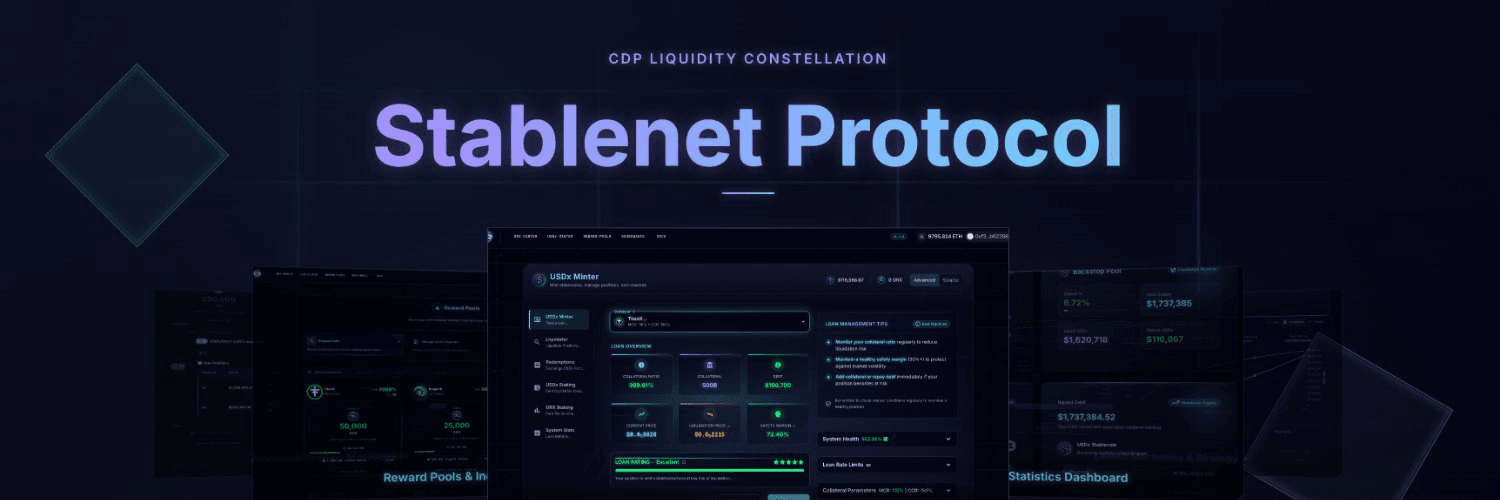
What is Ouroboros (ORX)?
Ouroboros (ORX) is the native value-accrual and coordination token of the Ouroboros Protocol, a DeFi ecosystem built on Ethereum and deeply integrated with the TitanX network. Unlike traditional cryptocurrencies that function as mediums of exchange or stores of value, ORX operates as a revenue-sharing mechanism.
Think of ORX as a "share token." When you hold and stake ORX, you receive a proportional share of 100% of all fees generated by every product within the Ouroboros ecosystem—starting with the USDx stablecoin.
Key Characteristics:
- Blockchain: Ethereum (ERC-20)
- Contract Address:
0xd536e7a9543cf9867a580b45cec7f748a1fe11ec - Ecosystem: TitanX-integrated
- Primary Function: Fee redistribution & supply compression
- Inflation Model: Zero (no minting after genesis)
Is Ouroboros (ORX) a Reserve Coin?
Many newcomers ask: "Is Ouroboros (ORX) a reserve coin?" The short answer is no. Despite being discussed alongside reserve assets, ORX does not fit the traditional definition.
Feature | Traditional Reserve Coin | Ouroboros (ORX) |
Backing | 1:1 collateral (fiat or crypto) | Protocol revenue (no fixed peg) |
Price Stability | Designed for stability | Volatile; driven by ecosystem performance |
Primary Use | Medium of exchange / hedge | Value accrual & staking rewards |
Example | USDC, DAI | ORX |
What ORX Actually Is: A revenue-backed token. Its value derives from three sources:
- Protocol fee generation
- Ecosystem adoption rates
- Token scarcity mechanisms (buy-and-burn + vesting penalties)
In contrast, USDx (the ecosystem's stablecoin) serves as the true collateral-backed asset, supported by TitanX and DragonX reserves.
How Does Ouroboros (ORX) Work?
The brilliance of ORX lies in its flywheel effect: more usage → more fees → more rewards → stronger demand → reduced supply. Here is how each component functions.
Fee Generation
Protocols within the Ouroboros ecosystem (starting with USDx) generate fees through:
- Borrowing against collateral
- Redemption operations
- Collateral management
100% Fee Distribution
Unlike most DeFi protocols that take a cut, Ouroboros distributes all fees to ORX stakers. Rewards are paid in USDx, TitanX, and other supported assets.
Buy-and-Burn Engine
TitanX deposits are used to automatically purchase ORX from liquidity pools (primarily Uniswap V3 and DODO). These purchased tokens are permanently removed from circulation.
Supply Compression Through Vesting
ORX launched via an Initial Lock Offering (ILO) with aggressive vesting schedules:
- 52-week vesting for TitanX depositors
- Heavy penalties for early claims (forfeited tokens are redistributed)
- 12-week vesting for ETH depositors (no penalties)
This mechanism ensures that circulating supply remains significantly lower than the theoretical max of ~1.27 billion ORX.
Ouroboros (ORX) Tokenomics
The ORX tokenomics model is often called "pumpamentals" —economic engineering designed to create sustained upward price pressure.
Tokenomic Feature | Mechanism | Effect on Price |
Buy & Burn Engine | TitanX deposits buy ORX from pools | ↓ Supply |
Vesting Penalties | Early exits forfeit tokens | ↓ Circulating supply |
Zero Inflation | No minting after genesis | No dilution |
Bonding Curve Emissions | Higher burn reduces future issuance | ↓ Supply over time |
Staking Rewards | 100% fee distribution in USDx/TitanX | ↑ Demand |
Current Market Snapshot (as of April 2026):
- Price: ~$0.00088 – $0.00092
- Market Cap: ~$430,000 – $470,000
- Circulating Supply: ~528 million ORX
- Trading Platforms: Uniswap V3, DODO
Can I Invest in Ouroboros (ORX)?
If you are asking "Can I invest in Ouroboros (ORX)?" , the short answer is yes—but not without understanding the significant risks involved. ORX is currently available through TitanX deposits, ETH deposits, or decentralized exchanges like Uniswap V3 and DODO. However, whether you should invest depends entirely on your risk tolerance, investment timeline, and familiarity with experimental DeFi mechanics.
Before making any decision, every potential investor must carefully evaluate the risks outlined below. Unlike blue-chip cryptocurrencies such as Bitcoin or Ethereum, ORX is an early-stage, experimental DeFi asset with a novel revenue-backed model.
Final Thoughts: Should You Buy Ouroboros (ORX)?
Ouroboros (ORX) is not for everyone. It is a high-risk, high-reward experimental DeFi asset designed specifically for patient participants who fully understand its complex mechanics.
You should consider buying ORX if you believe in the TitanX ecosystem's long-term growth, are comfortable locking your capital for 12 to 52 weeks, understand that ORX is volatile and not a stable asset, and want exposure to a zero-inflation, revenue-backed model.
On the other hand, you should avoid ORX if you need short-term liquidity, are risk-averse or new to DeFi, do not fully understand smart contract risks, or cannot afford to lose your entire investment.
For those who conduct their own research and accept the inherent risks, ORX offers a unique bet on the future of real-yield DeFi.
Ready to trade? WEEX offers zero fees, instant execution, and the security you need. Sign up on WEEX Now and Start Trading!
FAQ
Q1: What is Ouroboros (ORX) in simple terms?
Ouroboros (ORX) is a revenue-sharing token on Ethereum. When you stake ORX, you earn a portion of 100% of all fees generated by the Ouroboros Protocol ecosystem. It is not a stablecoin or a reserve coin—it is a value-capture token.
Q2: Is Ouroboros (ORX) a good investment?
ORX is a high-risk, high-conviction asset. Its zero-inflation model, buy-and-burn engine, and real-yield staking are innovative. However, risks include smart contract vulnerabilities, low liquidity, and heavy dependency on the TitanX ecosystem. Only invest what you can afford to lose.
Q3: Where can I stake Ouroboros (ORX)?
You can stake ORX directly through the official Ouroboros Protocol staking interface. There is no lock-up period—you can withdraw anytime. Rewards are distributed in USDx, TitanX, and other ecosystem assets.
Q4: What is the ORX contract address?
The official Ethereum contract address for Ouroboros (ORX) is: 0xd536e7a9543cf9867a580b45cec7f748a1fe11ec Always verify this address on Etherscan before any transaction to avoid spoofed tokens.
You may also like
World Collective Oil Reserve (WCOR) Price Prediction 2026-2045: Expert Insights
WCOR (World Collective Oil Reserve) is a Solana-based cryptocurrency token that promotes an “oil reserve + real-world asset (RWA) narrative.” However, there is no public evidence that it is actually backed by physical oil assets. It is essentially a highly speculative, narrative-driven token. Its current market cap is around $14 million, with relatively low liquidity and high volatility, and its price is mainly driven by market sentiment and hype. Most analyses suggest limited short-term upside, with a possible gradual increase to around $0.02 by 2030. Overall, it is considered a high-risk crypto asset driven more by narrative speculation than fundamentals.
WEEX Gold & Silver 0% Fees Event: Trade Metals, Crude Oil and Stock Futures With Zero Fees
Join the WEEX 0-fee futures event from April 16 to May 31, 2026. Trade eligible gold, silver, crude oil, and stock futures with 0% fees.
Can PAC Coin Reach $1 Soon? Analyzing Public Asset Control
PAC is a Solana-based meme token with a government-themed narrative, but it is highly speculative.
At its current price (~$0.0009) and 1B supply, reaching $1 would require a $1B market cap, which is very unlikely.
Short-term moves to $0.001 or $0.01 are more realistic, but the token is highly volatile due to low liquidity and hype-driven trading.
Overall, $1 is not a realistic target, and PAC is better suited for short-term speculation than long-term investment.
What Is SAOS? Strategic American Oil Supply Token Explained
SAOS is a meme token on Solana with a 75,000 USD market cap and 22,000 USD locked liquidity, positioned around oil supply themes but lacking real asset backing
It thrives on pure narrative speculation, with no utility, website, or doxxed team, making it highly volatile and attention-dependent
Traders should distinguish SAOS from legitimate real-world asset projects, as its branding is speculative rather than substantive
Positive aspects include locked liquidity reducing rug pull risks, but low trading activity signals high uncertainty
NBIS Stock: What Nebius’ AI Cloud Surge Means Now
NBIS stock jumped as Nebius reported rapid AI cloud growth. See the key Q1 2026 numbers, catalysts, valuation risks, and what to watch next.

What Is Public Asset Control (PAC) Coin? Explained for Beginners
Public Asset Control (PAC) is a Solana-based token that uses a “government asset control” narrative involving oil and gold themes, but it has no verified ties to any real institutions or governments. It is mainly an entertainment-focused, speculative meme coin.
The project’s claims about links to entities like BlackRock or Palantir are unverified, and its own disclaimer states it is not a real financial or institutional asset. Like many new Solana tokens, PAC is highly volatile, with low liquidity and limited transparency, including no fully verified audit.
Overall, PAC is a high-risk speculative token driven by hype and storytelling rather than real utility. Beginners are advised to be cautious, verify contract details, and prioritize risk control before considering any trading.
Public Asset Control: What PAC Token Really Is
Public Asset Control PAC is a Solana token with bold asset-control branding. Learn what it is, what is verified, and the key trading risks.

Why Is Chinese Oil Asset Reserve (COAR Crypto) Trending Now?
Why is Chinese Oil Asset Reserve trending now? Learn the latest COAR crypto price action, trading volume, oil narrative, Solana pair data, and what is driving attention today.
How to Buy Chinese Oil Asset Reserve (COAR) Token in 2026: Latest Step-by-Step Guide, Contract Address, and Safe Buying Tips
How to buy Chinese Oil Asset Reserve (COAR) token step by step, including the official COAR contract address, Solana wallet setup, SOL funding, and latest market data.
COAR Coin: What Chinese Oil Asset Reserve Really Is
COAR coin is a new Solana oil-narrative token. Learn what Chinese Oil Asset Reserve claims, how to verify the contract, and key trading risks.
Did the CLARITY Act Pass Today? Latest Status and the History of the Crypto Bill
SEO meta description: Did the CLARITY Act pass today? Read the latest crypto bill update, the history of the CLARITY Act, House and Senate votes, and what happens next for U.S. crypto regulation.
What Is Chinese Oil Asset Reserve (COAR) Token? $COAR and Coar Stock Relationship Explained
Chinese Oil Asset Reserve (COAR) token explained, $COAR price, Solana details, and the relationship between COAR and Coar stock. Learn the latest facts.
Trade to Earn on WEEX: Join the Futures Trading Event and Earn Real-Time WXT Rewards Throughout May 2026
Join the WEEX Trade to Earn Series Five event from May 1–31, 2026 and earn real-time WXT rewards through futures trading. Boost your rebate level, complete missions, invite friends, and maximize your trade to earn rewards with USDT-M futures trading.
What Is World Cup Meme Coin? Football Meme Crypto Narrative Explained
World Cup meme coin $WCMEME is a Solana token that collapsed 96% in 24 hours. Learn how football meme narratives work and the risks involved.

Trade to Earn With Futures Trading on WEEX: How Smart Traders Are Turning Every Position Into WXT Rewards
Join the WEEX Trade to Earn Series Five campaign and earn real-time WXT rewards through futures trading from May 1–31, 2026. Upgrade mining levels, unlock higher rebate ratios, complete missions, and maximize your trade to earn rewards with USDT-M futures trading.
CBRS Stock: What to Know About Cerebras After Its IPO
CBRS stock surged after Cerebras priced its IPO at $185. Learn what the AI chipmaker does, why valuation matters, and what risks to watch.

SpaceX IPO Stock Market Impact: What Investors Should Watch
SpaceX’s IPO could reshape indexes, liquidity, space stocks, and crypto risk appetite. Here is what matters before the listing.
HMSTR Token Price: What Moves Hamster Kombat Now
Track HMSTR token price, supply, catalysts, and risks. Learn what drives Hamster Kombat price action and what traders should watch.
World Collective Oil Reserve (WCOR) Price Prediction 2026-2045: Expert Insights
WCOR (World Collective Oil Reserve) is a Solana-based cryptocurrency token that promotes an “oil reserve + real-world asset (RWA) narrative.” However, there is no public evidence that it is actually backed by physical oil assets. It is essentially a highly speculative, narrative-driven token. Its current market cap is around $14 million, with relatively low liquidity and high volatility, and its price is mainly driven by market sentiment and hype. Most analyses suggest limited short-term upside, with a possible gradual increase to around $0.02 by 2030. Overall, it is considered a high-risk crypto asset driven more by narrative speculation than fundamentals.
WEEX Gold & Silver 0% Fees Event: Trade Metals, Crude Oil and Stock Futures With Zero Fees
Join the WEEX 0-fee futures event from April 16 to May 31, 2026. Trade eligible gold, silver, crude oil, and stock futures with 0% fees.
Can PAC Coin Reach $1 Soon? Analyzing Public Asset Control
PAC is a Solana-based meme token with a government-themed narrative, but it is highly speculative.
At its current price (~$0.0009) and 1B supply, reaching $1 would require a $1B market cap, which is very unlikely.
Short-term moves to $0.001 or $0.01 are more realistic, but the token is highly volatile due to low liquidity and hype-driven trading.
Overall, $1 is not a realistic target, and PAC is better suited for short-term speculation than long-term investment.
What Is SAOS? Strategic American Oil Supply Token Explained
SAOS is a meme token on Solana with a 75,000 USD market cap and 22,000 USD locked liquidity, positioned around oil supply themes but lacking real asset backing
It thrives on pure narrative speculation, with no utility, website, or doxxed team, making it highly volatile and attention-dependent
Traders should distinguish SAOS from legitimate real-world asset projects, as its branding is speculative rather than substantive
Positive aspects include locked liquidity reducing rug pull risks, but low trading activity signals high uncertainty
NBIS Stock: What Nebius’ AI Cloud Surge Means Now
NBIS stock jumped as Nebius reported rapid AI cloud growth. See the key Q1 2026 numbers, catalysts, valuation risks, and what to watch next.
What Is Public Asset Control (PAC) Coin? Explained for Beginners
Public Asset Control (PAC) is a Solana-based token that uses a “government asset control” narrative involving oil and gold themes, but it has no verified ties to any real institutions or governments. It is mainly an entertainment-focused, speculative meme coin.
The project’s claims about links to entities like BlackRock or Palantir are unverified, and its own disclaimer states it is not a real financial or institutional asset. Like many new Solana tokens, PAC is highly volatile, with low liquidity and limited transparency, including no fully verified audit.
Overall, PAC is a high-risk speculative token driven by hype and storytelling rather than real utility. Beginners are advised to be cautious, verify contract details, and prioritize risk control before considering any trading.


