
ROAR vs VDOR vs WAR Crypto: Which Oil Themed Token Offers the Highest Profit in 2026?

ROAR, VDOR, and WAR are less about fundamental value and more about storytelling, momentum, and liquidity flows. These three Solana-based tokens have captured the attention of speculative traders looking for aggressive gains in 2026.
For traders seeking high returns, understanding how these narratives evolve and how markets react to them is essential to identifying which token may deliver the most compelling profit potential. This article breaks down each token's narrative strength, risk profile, price expectations, and overall suitability for different types of traders.
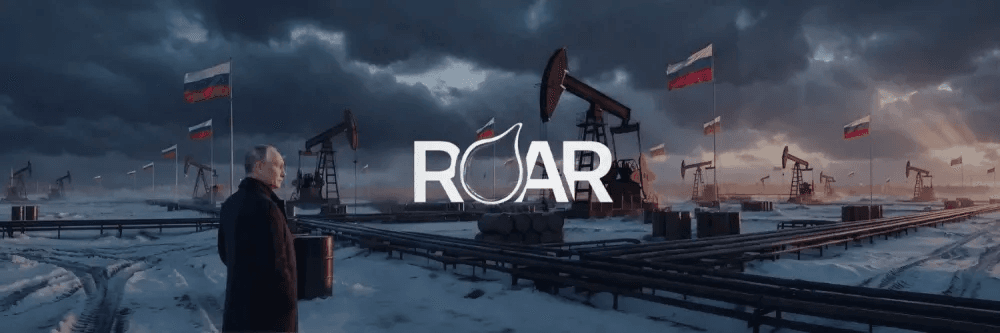
What Are ROAR, VDOR, and WAR Crypto?
ROAR, VDOR, and WAR are all Solana-based tokens built around thematic narratives rather than tangible asset backing. None of these tokens are backed by physical reserves or real-world commodities. Instead, they derive their value entirely from market storytelling, community attention, and speculative momentum.
ROAR, which stands for Russian Oil Asset Reserve, positions itself as a Siberian oil-backed concept, tapping into geopolitical tensions and energy supply narratives. It is often marketed as a second-chance opportunity for traders who missed earlier oil-themed rallies. The token's branding heavily emphasizes Russian energy dominance and sanctions-related narratives.
VDOR, or Vanguard Digital Oil Reserve, adopts a more institutional tone, presenting itself as a digital proxy for oil market sentiment. While it lacks real-world ETF-style backing, its branding appeals to traders seeking a more structured narrative. VDOR is often perceived as the more professional-looking cousin in this trio, even though it remains a high-volatility narrative token at its core.
WAR, which stands for Western Asset Reserve, diverges slightly from the oil-focused theme. It focuses on broader conflict-driven narratives and is framed as a reserve asset that could benefit during periods of geopolitical instability. Unlike ROAR and VDOR, WAR's narrative is less directly tied to oil hype and more focused on general wartime capital flows and safe-haven storytelling.

Narrative Strength and Market Attention
In narrative-driven cryptocurrency markets, attention is everything. Tokens that dominate social media, influencer discussions, and trading communities tend to outperform, at least in the short term. Understanding which token holds the strongest narrative momentum is critical for timing entry and exit points.
ROAR and VDOR currently lead in narrative momentum due to ongoing interest in oil-linked memecoins. Both benefit from a clear storyline centered on energy markets, geopolitical tension, and speculative opportunity. ROAR thrives on aggressive marketing like "next 10X opportunity," creating fear-of-missing-out that drives rapid buying pressure. VDOR takes a steadier approach, maintaining visibility through exchange listings and consistent trading activity, appealing to traders who prefer sustainable momentum. WAR, by contrast, struggles to capture the same attention. Its war-themed narrative is more abstract and less actionable, leaving it as a secondary option unless a major global conflict erupts.
Core Narratives and Positioning Comparison
The following comparison highlights how each token positions itself in the market.
ROAR's main narrative is that of a sovereign Siberian oil-backed token leveraging Russian energy geopolitics, sanctions, and oil flows. Its market image is aggressive and meme-style, often marketed as a second-chance 10X story. ROAR is viewed as a higher-beta oil-themed play.
VDOR's main narrative is that of an institutional-style digital oil reserve on Solana, branded as a digital twin of crude oil sentiment without real backing. Its market image is more professional but still high-volatility. VDOR appeals to traders who want a veneer of legitimacy while chasing speculative gains.
WAR's main narrative is that of a neutral-ground digital asset reserve benefiting from wartime capital flows. Its market image is lower-profile and niche, focused on crisis narratives rather than pure oil. WAR attracts traders who want geopolitical exposure without the direct oil focus of ROAR and VDOR.
Profit Potential and Risk Profile
From a purely speculative perspective, profit potential is closely tied to both narrative strength and liquidity. Each token offers a different risk-reward equation that suits different trading styles.
ROAR stands out as the highest-beta option among the three. Its smaller market capitalization means it can move rapidly during periods of hype, offering the possibility of 5X to 10X gains or more. However, this same characteristic makes ROAR highly vulnerable to sharp corrections, low liquidity, and sudden sell-offs. Traders who enter at the wrong time can lose a significant portion of their investment in hours rather than days.
VDOR offers a more balanced risk-reward profile. With stronger daily trading volume that often reaches significant levels, VDOR provides smoother price action and reduced slippage. While its upside potential may be slightly lower than ROAR in percentage terms, VDOR is generally considered more stable within the high-volatility memecoin category. For traders who want high risk but not extreme risk, VDOR is often the preferred choice.
WAR occupies a middle ground but leans toward lower immediate upside compared to ROAR and VDOR. Its market capitalization and trading activity suggest moderate growth potential, but it lacks the explosive narrative catalysts that drive rapid price appreciation in the other two tokens. WAR is better suited as a speculative diversifier rather than a primary profit driver.
In short, traders chasing maximum percentage gains may favor ROAR. Those seeking a more controlled yet still volatile play may prefer VDOR. WAR is best used as a small side position rather than a core holding.
Which Token Should I Choose?
The right token depends on your risk tolerance and trading style. If you are a high-risk trader who can handle extreme volatility and potential losses of 50 percent or more, ROAR offers the highest upside. Enter during narrative lulls and exit during hype peaks. Use tight stop-losses and never risk more than you can afford to lose. If you prefer a more balanced approach with stronger liquidity and less extreme price swings, VDOR is the better choice. VDOR still carries significant risk, but its higher trading volume makes it easier to enter and exit positions without excessive slippage.
If you are looking for a niche speculative diversifier that may benefit from conflict-driven narratives, WAR can serve as a small allocation. However, do not expect WAR to lead the pack in terms of percentage gains unless a major global crisis occurs. For most traders focused on narrative-driven profits in 2026, a combination of ROAR for high-upside exposure and VDOR for more stable momentum may be the most effective strategy.
How to Buy ROAR, VDOR, and WAR
Buying VDOR/ROAR/WAR is slightly different from buying mainstream crypto, as it requires using a Solana wallet and decentralized exchanges. Don’t worry—this step-by-step guide makes the process simple, even if you’re new to crypto. Follow these steps to buy VDOR safely:
Step 1: Set Up a Solana Wallet
Download and install a Solana-compatible wallet. Create a new wallet and securely store your recovery phrase offline. This phrase is the only way to recover your funds if you lose access.
Step 2: Buy SOL (Solana)
To buy VDOR/ROAR/WAR, you first need SOL, which is used for both trading and transaction fees. Purchase SOL on a major exchange such as Bitget, then withdraw it to your wallet address.
Make sure you select the Solana network (SOL) when transferring funds.
Step 3: Connect Your Wallet to a DEX
Go to a Solana DEX such as Jupiter or Raydium. Click “Connect Wallet” and choose your wallet. Once connected, you will see your SOL balance.
Step 4: Find the Correct VDOR Token
Paste the official contract address into the search bar. This step is critical, as fake tokens with similar names may exist. After pasting the address, confirm that the token details match before proceeding.
Step 5: Swap SOL for VDOR
Enter the amount of SOL you want to trade. The platform will show an estimated amount you will receive. Set slippage tolerance to around 1% to 3% due to limited liquidity.
Confirm the transaction and approve it in your wallet.
Step 6: Confirm and Store Your Tokens
Once the transaction is completed, VDOR/ROAR/WAR will appear in your wallet. If it does not show automatically, you can add it manually using the contract address.
Keep your tokens in your wallet or move them to a more secure setup if needed.
Conclusion
ROAR, VDOR, and WAR represent a new wave of narrative-driven cryptocurrencies where storytelling and hype outweigh traditional fundamentals. Each token offers a different risk-reward profile. ROAR offers the highest potential for explosive gains but comes with extreme volatility. VDOR provides a more balanced approach with stronger liquidity and sustained traction. WAR remains a niche option with lower short-term upside for most traders.
For traders active in 2026, success depends on choosing the right token, timing the narrative cycle, and managing risk effectively. Always remember that in the world of narrative tokens, today's winner can easily become tomorrow's loser. Trade responsibly.
Ready to trade? WEEX offers zero fees, instant execution, and the security you need. Sign up on WEEX Now and Start Trading!
FAQ
What is the main difference between ROAR, VDOR, and WAR?
ROAR focuses on Russian oil and geopolitical narratives with an aggressive marketing style. VDOR takes a more institutional tone as a digital oil proxy. WAR focuses on broader conflict-driven themes rather than pure oil.
Which token offers the highest profit potential?
ROAR offers the highest speculative upside due to its smaller market cap and aggressive narrative marketing. However, this comes with extreme volatility and liquidity risks.
Is VDOR safer than ROAR?
VDOR is not safe in absolute terms, but it offers a more balanced risk-reward profile with stronger trading volume and reduced slippage compared to ROAR.
Are any of these tokens backed by real oil reserves?
No. ROAR, VDOR, and WAR are narrative-driven tokens with no verifiable physical asset backing. They derive value entirely from storytelling and market momentum.
Which token is best for beginners?
None of these tokens are suitable for beginners due to their extreme volatility and speculative nature. Beginners should start with established cryptocurrencies like Bitcoin or Ethereum before exploring narrative-driven tokens.
You may also like

WEEX Gold & Silver 0% Fees Event: Trade Metals, Crude Oil and Stock Futures With Zero Fees
Join the WEEX 0-fee futures event from April 16 to May 31, 2026. Trade eligible gold, silver, crude oil, and stock futures with 0% fees.
Can PAC Coin Reach $1 Soon? Analyzing Public Asset Control
PAC is a Solana-based meme token with a government-themed narrative, but it is highly speculative.
At its current price (~$0.0009) and 1B supply, reaching $1 would require a $1B market cap, which is very unlikely.
Short-term moves to $0.001 or $0.01 are more realistic, but the token is highly volatile due to low liquidity and hype-driven trading.
Overall, $1 is not a realistic target, and PAC is better suited for short-term speculation than long-term investment.
What Is SAOS? Strategic American Oil Supply Token Explained
SAOS is a meme token on Solana with a 75,000 USD market cap and 22,000 USD locked liquidity, positioned around oil supply themes but lacking real asset backing
It thrives on pure narrative speculation, with no utility, website, or doxxed team, making it highly volatile and attention-dependent
Traders should distinguish SAOS from legitimate real-world asset projects, as its branding is speculative rather than substantive
Positive aspects include locked liquidity reducing rug pull risks, but low trading activity signals high uncertainty
NBIS Stock: What Nebius’ AI Cloud Surge Means Now
NBIS stock jumped as Nebius reported rapid AI cloud growth. See the key Q1 2026 numbers, catalysts, valuation risks, and what to watch next.
What Is Public Asset Control (PAC) Coin? Explained for Beginners
Public Asset Control (PAC) is a Solana-based token that uses a “government asset control” narrative involving oil and gold themes, but it has no verified ties to any real institutions or governments. It is mainly an entertainment-focused, speculative meme coin.
The project’s claims about links to entities like BlackRock or Palantir are unverified, and its own disclaimer states it is not a real financial or institutional asset. Like many new Solana tokens, PAC is highly volatile, with low liquidity and limited transparency, including no fully verified audit.
Overall, PAC is a high-risk speculative token driven by hype and storytelling rather than real utility. Beginners are advised to be cautious, verify contract details, and prioritize risk control before considering any trading.
Public Asset Control: What PAC Token Really Is
Public Asset Control PAC is a Solana token with bold asset-control branding. Learn what it is, what is verified, and the key trading risks.

Why Is Chinese Oil Asset Reserve (COAR Crypto) Trending Now?
Why is Chinese Oil Asset Reserve trending now? Learn the latest COAR crypto price action, trading volume, oil narrative, Solana pair data, and what is driving attention today.
How to Buy Chinese Oil Asset Reserve (COAR) Token in 2026: Latest Step-by-Step Guide, Contract Address, and Safe Buying Tips
How to buy Chinese Oil Asset Reserve (COAR) token step by step, including the official COAR contract address, Solana wallet setup, SOL funding, and latest market data.
COAR Coin: What Chinese Oil Asset Reserve Really Is
COAR coin is a new Solana oil-narrative token. Learn what Chinese Oil Asset Reserve claims, how to verify the contract, and key trading risks.
Did the CLARITY Act Pass Today? Latest Status and the History of the Crypto Bill
SEO meta description: Did the CLARITY Act pass today? Read the latest crypto bill update, the history of the CLARITY Act, House and Senate votes, and what happens next for U.S. crypto regulation.
What Is Chinese Oil Asset Reserve (COAR) Token? $COAR and Coar Stock Relationship Explained
Chinese Oil Asset Reserve (COAR) token explained, $COAR price, Solana details, and the relationship between COAR and Coar stock. Learn the latest facts.
Trade to Earn on WEEX: Join the Futures Trading Event and Earn Real-Time WXT Rewards Throughout May 2026
Join the WEEX Trade to Earn Series Five event from May 1–31, 2026 and earn real-time WXT rewards through futures trading. Boost your rebate level, complete missions, invite friends, and maximize your trade to earn rewards with USDT-M futures trading.

Trade to Earn With Futures Trading on WEEX: How Smart Traders Are Turning Every Position Into WXT Rewards
Join the WEEX Trade to Earn Series Five campaign and earn real-time WXT rewards through futures trading from May 1–31, 2026. Upgrade mining levels, unlock higher rebate ratios, complete missions, and maximize your trade to earn rewards with USDT-M futures trading.
CBRS Stock: What to Know About Cerebras After Its IPO
CBRS stock surged after Cerebras priced its IPO at $185. Learn what the AI chipmaker does, why valuation matters, and what risks to watch.

SpaceX IPO Stock Market Impact: What Investors Should Watch
SpaceX’s IPO could reshape indexes, liquidity, space stocks, and crypto risk appetite. Here is what matters before the listing.

HMSTR Token Price: What Moves Hamster Kombat Now
Track HMSTR token price, supply, catalysts, and risks. Learn what drives Hamster Kombat price action and what traders should watch.
How to Buy Public Asset Control (PAC) Token in 2026: Latest Solana Buying Guide
How to buy Public Asset Control (PAC) token in 2026, PAC contract address, Solana wallet setup, Jupiter swap guide, latest price, liquidity, and risks.
What Is Public Asset Control (PAC) Token and How Does It Work? Latest Solana PAC Token Guide
Public Asset Control (PAC) token explained. Learn what PAC is, how it works on Solana, current price snapshot, risks, and buying basics.
WEEX Gold & Silver 0% Fees Event: Trade Metals, Crude Oil and Stock Futures With Zero Fees
Join the WEEX 0-fee futures event from April 16 to May 31, 2026. Trade eligible gold, silver, crude oil, and stock futures with 0% fees.
Can PAC Coin Reach $1 Soon? Analyzing Public Asset Control
PAC is a Solana-based meme token with a government-themed narrative, but it is highly speculative.
At its current price (~$0.0009) and 1B supply, reaching $1 would require a $1B market cap, which is very unlikely.
Short-term moves to $0.001 or $0.01 are more realistic, but the token is highly volatile due to low liquidity and hype-driven trading.
Overall, $1 is not a realistic target, and PAC is better suited for short-term speculation than long-term investment.
What Is SAOS? Strategic American Oil Supply Token Explained
SAOS is a meme token on Solana with a 75,000 USD market cap and 22,000 USD locked liquidity, positioned around oil supply themes but lacking real asset backing
It thrives on pure narrative speculation, with no utility, website, or doxxed team, making it highly volatile and attention-dependent
Traders should distinguish SAOS from legitimate real-world asset projects, as its branding is speculative rather than substantive
Positive aspects include locked liquidity reducing rug pull risks, but low trading activity signals high uncertainty
NBIS Stock: What Nebius’ AI Cloud Surge Means Now
NBIS stock jumped as Nebius reported rapid AI cloud growth. See the key Q1 2026 numbers, catalysts, valuation risks, and what to watch next.
What Is Public Asset Control (PAC) Coin? Explained for Beginners
Public Asset Control (PAC) is a Solana-based token that uses a “government asset control” narrative involving oil and gold themes, but it has no verified ties to any real institutions or governments. It is mainly an entertainment-focused, speculative meme coin.
The project’s claims about links to entities like BlackRock or Palantir are unverified, and its own disclaimer states it is not a real financial or institutional asset. Like many new Solana tokens, PAC is highly volatile, with low liquidity and limited transparency, including no fully verified audit.
Overall, PAC is a high-risk speculative token driven by hype and storytelling rather than real utility. Beginners are advised to be cautious, verify contract details, and prioritize risk control before considering any trading.
Public Asset Control: What PAC Token Really Is
Public Asset Control PAC is a Solana token with bold asset-control branding. Learn what it is, what is verified, and the key trading risks.


