
Aave rsETH Freeze vs Spark Exit: Lessons from the DeFi Crisis

In the fast-paced world of decentralized finance, decisions can make or break protocols overnight. On April 18, 2026, a security breach in Kelp DAO’s cross-chain bridge led to an attacker minting 116,500 unbacked rsETH tokens, which were then deposited into Aave to borrow WETH. This incident forced Aave to freeze rsETH operations, exposing potential bad debts of around $195 million, as estimated by Lookonchain. Meanwhile, SparkLend, part of the MakerDAO ecosystem, emerged unscathed because it had exited rsETH support three months earlier on January 29, 2026—the same day Aave expanded its rsETH integration. This article dives into the contrasting strategies behind the Aave rsETH freeze vs Spark exit, exploring why one protocol grew while the other pulled back, and what it means for crypto investors navigating DeFi risks.
KEY TAKEAWAYS
- Aave’s decision to expand rsETH with high loan-to-value ratios aimed at boosting WETH utilization but left it vulnerable to the April 18 attack, highlighting the perils of growth-focused strategies in DeFi.
- Spark’s proactive exit from rsETH, driven by low usage and efficiency concerns, minimized losses and demonstrated the value of risk-adjusted yield prioritization.
- The rsETH crisis underscores how layered risks in restaked assets like cross-chain bridges and oracle dependencies can amplify bad debt in lending protocols.
- Investors should evaluate DeFi protocols based on their risk management philosophies—expansion versus efficiency—to better safeguard portfolios.
- Even without direct exposure, indirect risks persist in interconnected ecosystems, as noted by Spark co-founder Sam MacPherson.
Understanding the rsETH Crisis: Aave Expanded While Spark Exited
The rsETH crisis serves as a stark reminder of how DeFi protocols handle emerging assets. RsETH, a restaked ETH token from Kelp DAO built on EigenLayer, promises yields by allowing users to stake ETH and restake it across networks. But unlike plain ETH, which mainly faces price volatility risks, rsETH layers on complexities like cross-chain bridges for asset transfers, issuance mechanisms ensuring real ETH backing, and protocol security from entities like Kelp DAO and EigenLayer. As Sam MacPherson, Spark’s co-founder, pointed out in an April 19, 2026, X post, claiming no risk exposure doesn’t eliminate indirect vulnerabilities if users hold collateral in affected markets.
On January 29, 2026, Spark executed a governance operation called Spell to halt new rsETH supplies. This move stemmed from a January 16 proposal by Phoenix Labs, Spark’s execution arm, citing low usage—mostly from a single wallet (address 0xb99a)—and the holder’s willingness to switch to alternatives like wstETH or weETH. The governance post stated, “Exiting rsETH can improve SparkLend’s safety margin and enhance risk-adjusted returns.” This was part of a broader asset cleanup, including tBTC, ezETH, and the entire Gnosis Chain market, all flagged for low utilization.
Contrast this with Aave’s approach. On the same day, Aave launched rsETH E-Mode, enabling users to borrow WETH against rsETH collateral with a 93% loan-to-value (LTV) ratio and 95% liquidation threshold. This expansion originated from a November 17, 2025, proposal by the Aave Chan Initiative (ACI), led by Marc Zeller, aiming to “restore WETH utilization and attract an expected $1 billion in rsETH inflows.” Risk parameters were vetted by Chaos Labs in January 2026, with input from LlamaRisk and community votes. It was a collaborative push for growth, not a solo misstep.
These decisions reflect fundamentally different philosophies. Spark’s risk control triggers on whether marginal costs exceed benefits—if usage dips below thresholds, user concentration spikes, or yields fall short, the asset gets axed. It’s an efficiency-driven tightening mechanism, independent of specific security flaws. Aave, however, chases market growth opportunities: low WETH utilization plus rsETH’s scale made E-Mode a tool to draw funds, with parameters geared toward expansion like loose supply caps.
The Attack and Its Aftermath: Dissecting Aave rsETH Freeze vs Spark Exit
Fast forward to April 18, 2026, when the Kelp DAO bridge hack unfolded. The attacker minted 116,500 bogus rsETH tokens without real ETH backing and deposited them into Aave, borrowing WETH worth millions. Aave’s Guardian team froze operations within hours, but Lookonchain’s on-chain estimates pegged potential bad debts at $195 million across Aave V3 and V4. Aave’s TVL plummeted from $26.4 billion to $19.8 billion amid panic withdrawals, and USDT market utilization hit 100%, with $300 million in new borrows.
Aave’s Umbrella insurance holds about $50 million, covering only 25% of the bad debt. Losses would first hit aWETH stakers, then WETH depositors proportionally, followed by stkAAVE holders and the DAO treasury. The protocol also faced oracle price lags, creating exposure windows during the chaos—a design difference from Spark’s setup.
SparkLend, however, reported no losses. Its rsETH market now holds a frozen residual value of $37,300 (15.32 rsETH), with the dominant wallet migrating to wstETH and weETH as predicted. MacPherson noted on April 19 that Spark’s rate-limited supply and borrow caps would have capped any attack’s scale, even if rsETH remained active. Plus, its three-way median oracle—drawing from Chronicle, Chainlink, and RedStone, with Uniswap TWAP as backup—guards against single-source manipulation.
To illustrate the risk layers, consider this comparison of asset risks:
| Asset | Primary Risks |
|---|---|
| ETH | Price fluctuations only |
| stETH | Protocol risks (e.g., Lido staking) |
| rsETH | Multi-layer: cross-chain bridges, issuance integrity, protocol security (Kelp DAO/EigenLayer) |
This table shows why rsETH, treated as a “safe” ETH variant, amplified the crisis when exploited. Aave’s high LTV and raised supply limits encouraged its use in borrowing, polluting the system with bad debt upon failure.
Why Did the rsETH Crisis Impact Aave So Severely?
The event’s scale boils down to rsETH being viewed as a secure asset for large-scale lending. Aave’s expansion treated it as such, boosting limits to draw inflows. But when the bridge vulnerability allowed fake minting, it exposed the chain’s weaknesses. As one crypto analyst from Chaos Labs reflected in their January 2026 risk report, parameters like 93% LTV were set to optimize growth, assuming baseline security. Post-attack, it became clear that restaked assets carry compounded risks, far beyond simple ETH.
Spark’s philosophy avoided this by not relying on foresight of specific threats. Instead, it limits maximum exposure systemically: rate caps prevent massive one-off deposits, and robust oracles ensure timely liquidations. MacPherson’s April 19 post emphasized, “SparkLend has rate-limited deposit and borrow caps. Its oracle mechanism uses a three-party median.” This layered defense compresses potential damage, even in unforeseen hacks.
The final bad debt hinges on Kelp DAO’s resolution—options include socializing losses across all rsETH holders (reducing Aave’s hit), isolating to L2 holders (keeping it steady), or a high-difficulty snapshot rollback. As of April 21, 2026, outcomes remain pending, but the $195 million gap quantifies the philosophies’ divergence.
Actionable Insights for Crypto Investors in the Wake of Aave rsETH Freeze vs Spark Exit
For beginners dipping into DeFi, this crisis offers practical lessons. First, scrutinize a protocol’s decision-making: Does it prioritize growth like Aave or efficiency like Spark? If you’re lending or borrowing, check LTV ratios and supply caps—high ones signal opportunity but also vulnerability. Diversify collateral away from complex restaked tokens; opt for simpler assets like ETH or stETH to minimize layered risks.
As a crypto trader, monitor governance forums for early signals. Spark’s January posts flagged low rsETH usage, hinting at exits—watching these could have prompted timely portfolio adjustments. Consider protocols with built-in safeguards, like Spark’s caps and oracles, for safer yields. Finally, always assess indirect exposures; even if a platform exits an asset, ecosystem ties might still bite.
In essence, the Aave rsETH freeze vs Spark exit isn’t about one being smarter—it’s about clashing strategies in an unpredictable space. Spark’s cautious efficiency shielded it, while Aave’s bold expansion backfired amid the hack. As DeFi evolves, balancing growth with robust risk controls will define winners. Investors who learn from this can navigate future crises with greater confidence, turning potential pitfalls into informed strategies.
DISCLAIMER: WEEX and affiliates provide digital asset exchange services, including derivatives and margin trading, only where legal and for eligible users. All content is general information, not financial advice-seek independent advice before trading. Cryptocurrency trading is high risk and may result in total loss. By using WEEX services you accept all related risks and terms. Never invest more than you can afford to lose. See our Terms of Use and Risk Disclosure for details.
You may also like

Will PAC Coin Reach $1? PAC Crypto Price Analysis
Will PAC coin reach 1? Current price is 0.000467, 1B supply, 467K marketcap. Here is what 467K marketcap would actually require.

Claude AI helps uncover forgotten Bitcoin fortune worth $400K hidden for 11 years
Claude AI helped recover a Bitcoin wallet lost for 9 years. 5 BTC, $400K. Did AI crack encryption? No. Here is what actually happened.
What Is COAR Crypto? Chinese Oil Asset Reserve (COAR) Coin Explained
What is COAR crypto? Chinese Oil Asset Reserve on Solana. market cap, oil-themed meme token. No real reserves. Learn risks & data inside.

Introducing Superform ($UP): User-Owned Onchain Neobank and Price Prediction
Superform is a user-owned onchain neobank gaining attention from v2 growth, SuperVaults, $UP utility, and WEEX trading.

What Is SAOS Crypto? Can SAOS Hit $0.1?
Is SAOS crypto a hidden gem? Strategic American Oil Supply on Solana explained. No hype, just data: $75K cap, locked LP, RWA narrative.
World Collective Oil Reserve (WCOR) Crypto Price Prediction 2026: Is WCOR a Good Investment
World Collective Oil Reserve (WCOR) crypto price prediction for 2026. We analyze the Solana registry token, on-chain risks, and whether WCOR can break 0.015.

$SUPERFORM Airdrop on WEEX: Complete Guide to SUPERFORM and Claim Free $SUPERFORM
Learn Superform tokenomics, its user-owned neobank ecosystem, and how to claim rewards in the WEEX 50,000 USDT SUPERFORM airdrop before May 21, 2026.

What Is WEEX Token (WXT)? A Complete Guide
WEEX Token (WXT) is the native utility token within the WEEX ecosystem. Its main purpose is to improve the trading experience rather than serve purely as a speculative asset.
In simple terms, WXT is mainly used for fee discounts (the more you hold, the lower your trading fees), staking rewards, and participation in platform events and governance voting. It also allows users to engage more deeply in the WEEX ecosystem, including promotional campaigns and future Web3 integrations.
In terms of acquisition, users can typically buy WXT directly on the WEEX exchange using assets like USDT, or earn it through platform events. For storage, it can be kept in an exchange wallet for convenience or transferred to external wallets (such as cold wallets) for enhanced security.
From a tokenomics and market perspective, WXT’s value is closely tied to WEEX’s user growth, trading volume, and overall crypto market conditions, making it relatively volatile and high-risk. Analysts generally view it as more suitable for users interested in the long-term development of the platform rather than short-term speculation.
Overall, WXT is a “trading utility token” that enhances user experience through fee discounts, staking benefits, and eco

What is World Cup Doge (WCDOGE) Coin? Is WCDOGE a Good Investment?
What is WCDOGE crypto? Meme token or football fan play? Real data, honest risks, and how to buy World Cup Doge.
SIM Owner Details: Legal PTA Check and Safety Guide
Learn what SIM owner details means, how to check SIMs on your CNIC through official PTA channels, and how to avoid lookup scams.
NBIS Stock: What Nebius’ AI Cloud Surge Means Now
NBIS stock jumped as Nebius reported rapid AI cloud growth. See the key Q1 2026 numbers, catalysts, valuation risks, and what to watch next.

WXT Bounty Hunter Program Explained: Earn Crypto Rewards While Learning to Trade on WEEX
The WXT Bounty Hunter Program is a WEEX campaign running from May 8 to May 18, 2026, designed to help beginners learn crypto trading while earning rewards.
Users complete simple tasks like depositing USDT, trading WXT, and holding tokens to receive WXT rewards. New users can earn bonuses such as 200 WXT, while advanced users can compete for larger rewards based on trading activity, including a 100,000 WXT prize pool.
The program uses net metrics (deposits and buys minus withdrawals) to ensure fairness and excludes institutional trading. Holding 300 WXT also unlocks extra benefits like enhanced airdrops.
Overall, it combines learning and earning, making it an entry point into crypto trading on WEEX.

Grass Token Price: GRASS Live Data, Drivers, and Risks
Track Grass token price, market cap, supply, unlocks, and key GRASS price drivers before trading the Solana AI and DePIN token.

WCOR Coin Explained: World Collective Oil Reserve on Solana
WCOR coin is a Solana token tied to an oil-reserve registry narrative. Here’s what it claims, current data, and the risks traders should watch.
What Is SAOS Crypto? Can SAOS Hit $0.1?
Is SAOS crypto a hidden gem? Strategic American Oil Supply on Solana explained. No hype, just data: $75K cap, locked LP, RWA narrative.
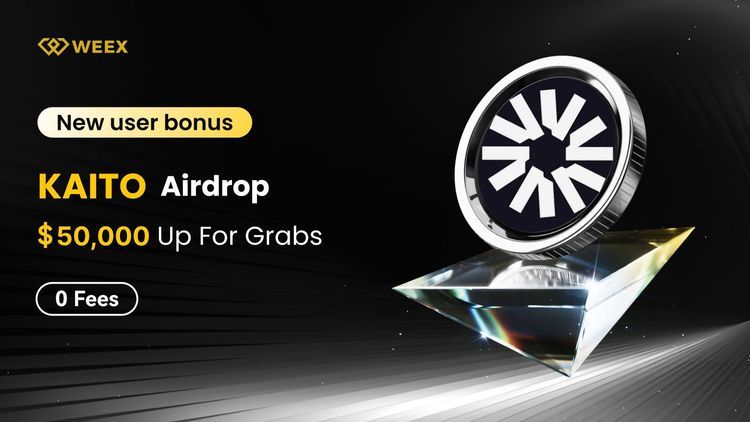
KAIO Airdrop: Share 50,000 USDT on WEEX with 0-Fee Trading
Trade KAIO/USDT with 0 fees on WEEX from May 7–14, 2026. New users can complete deposit and spot trading tasks to share 50,000 USDT in rewards.

What Is SAOS? Strategic American Oil Supply Token Explained
SAOS is a meme token on Solana with a 75,000 USD market cap and 22,000 USD locked liquidity, positioned around oil supply themes but lacking real asset backing
It thrives on pure narrative speculation, with no utility, website, or doxxed team, making it highly volatile and attention-dependent
Traders should distinguish SAOS from legitimate real-world asset projects, as its branding is speculative rather than substantive
Positive aspects include locked liquidity reducing rug pull risks, but low trading activity signals high uncertainty
How to Buy Public Asset Control (PAC) Token in 2026: Latest Solana Buying Guide
How to buy Public Asset Control (PAC) token in 2026, PAC contract address, Solana wallet setup, Jupiter swap guide, latest price, liquidity, and risks.
Will PAC Coin Reach $1? PAC Crypto Price Analysis
Will PAC coin reach 1? Current price is 0.000467, 1B supply, 467K marketcap. Here is what 467K marketcap would actually require.
Claude AI helps uncover forgotten Bitcoin fortune worth $400K hidden for 11 years
Claude AI helped recover a Bitcoin wallet lost for 9 years. 5 BTC, $400K. Did AI crack encryption? No. Here is what actually happened.
What Is COAR Crypto? Chinese Oil Asset Reserve (COAR) Coin Explained
What is COAR crypto? Chinese Oil Asset Reserve on Solana. market cap, oil-themed meme token. No real reserves. Learn risks & data inside.
Introducing Superform ($UP): User-Owned Onchain Neobank and Price Prediction
Superform is a user-owned onchain neobank gaining attention from v2 growth, SuperVaults, $UP utility, and WEEX trading.
What Is SAOS Crypto? Can SAOS Hit $0.1?
Is SAOS crypto a hidden gem? Strategic American Oil Supply on Solana explained. No hype, just data: $75K cap, locked LP, RWA narrative.
World Collective Oil Reserve (WCOR) Crypto Price Prediction 2026: Is WCOR a Good Investment
World Collective Oil Reserve (WCOR) crypto price prediction for 2026. We analyze the Solana registry token, on-chain risks, and whether WCOR can break 0.015.


