
 Buy Crypto
- Markets
 Futures
- Spot
- Copy Trade
- Earn
- More
Sentient Reveals Tokenomics, How Will the Market Price It?

Original Title: "Sentient Reveals Tokenomics, How Will the Market Price It?"
Original Author: ChandlerZ, Foresight News
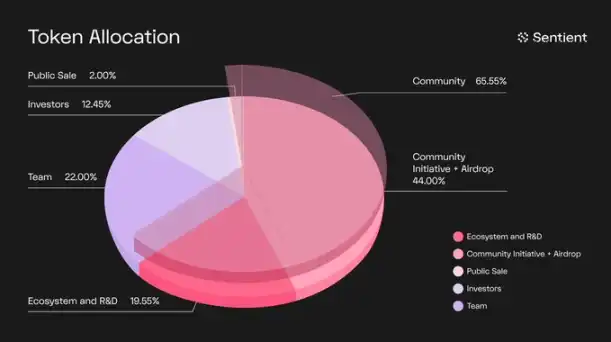
On January 16, the open-source AI platform Sentient revealed the SENT tokenomics. The total token supply of SENT is approximately 34.3 billion, with 44% allocated for community incentives and airdrops, 19.55% for the ecosystem and development, 2% for public sale, 22% for the team, and 12.45% for investors.
According to Polymarket data, the market is betting that the probability of Sentient's FDV exceeding $200 million on the day after its launch has risen to 99%, with an 87% probability of exceeding $400 million, and an 83% probability of exceeding $600 million. The current trading volume of this prediction market is approximately $330,000.
Allocation Rule Details
Within the entire ecosystem, SENT is used for agency, models, data services, and other Artifact-driven products. SENT can also be used between Artifacts for payments, enabling a composable on-chain value flow between services. The official total supply of SENT is set at 34,359,738,368, precisely 2^35. The official team mentioned that the full story of how this number was chosen will be shared in the future; however, tech-savvy readers may be able to infer the reasons behind it.
SENT allocation is divided into five main categories: community initiatives and airdrops, ecosystem and development, team, investors, and public sale.
Community Initiatives and Airdrops — 44.00%
This portion of the tokens accounts for 44% of the total supply, dedicated specifically to airdrops, community grants, bounties, and incentive programs to reward users and developers for their verifiable work on the GRID. To ensure broad ownership, 30% of this token portion will unlock at TGE (approximately 13% of the total supply), and the remaining 70% will linearly unlock over 4 years. By design, individuals contributing to building, testing, and sharing open-source intelligence and products will be eligible for the largest share of the tokens. The airdrop will fully unlock at TGE.
Ecosystem and Development — 19.55%
This portion of the token accounts for 19.55% of the total supply and will be used to promote ecosystem development, research and development, growth, infrastructure building, and Sentient Foundation's operation. To ensure a long-term stable supply, 30% of it will unlock at TGE (Token Generation Event), and the remaining 70% will unlock linearly over four years.
Team—22.00%
This part of the treasury accounts for 22% of the total supply, specifically for the Sentient Foundation and Sentient Labs' team members, including employees, founders, and key contractors. At TGE, the team treasury will be locked for one year, after which the funds will be released linearly over 6 years with a 1-year cliff.
Investors—12.45%
This portion of the token represents 12.45% of the total supply and is allocated to investors who supported Sentient in the private sale round. Investor tokens will lock for one year and unlock linearly over four years. This structure aims to reward early investors' confidence.
Public Sale—2.00%
This public sale constitutes 2% of the total supply and aims to encourage broader community participation in the project's launch. This allocation will unlock entirely at TGE. Specific details of the public sale structure will be announced soon.
By the end of November 2025, Sentient will launch an airdrop registration portal targeting four groups: community contributors, active users of Sentient Chat, top voices on social platforms, and external open-source researchers.
The second quarter activity will be based on new roles of contribution, a clearer upgrade path, and various reward mechanisms. Rewards will include SENT tokens, NFTs, and peripheral merchandise, among others. Specific details of the airdrop events are yet to be announced.
The $85 Million AI Rising Star
Sentient is an AI research organization dedicated to building an open general artificial intelligence (AGI) economy, developing a platform and protocol that allows open-source AI developers to monetize their models, data, and other innovations, enabling developers to collaborate to collectively build powerful AI alerts and become key stakeholders driving AI transformation and prosperity in the new open AGI economy.
Sentient has introduced the "OML" (Open, Monetized, Loyalty) model concept, aiming to advance the shared open AGI economy through the OML model, constructing a shared open AGI economic system involving millions of AI agents and billions of users, providing an inexhaustible driving force for the innovation and development of downstream applications.
At the product and architecture level, Sentient's core is its intelligent network called GRID (Global Research and Intelligence Directory). The official description portrays it as a collaborative system composed of specialized agents, models, data, tools, and computing power: when a user initiates a query, the task is broken down, routed to the appropriate agent/tool/data source, and then the multi-path results are aggregated into a consistent output.
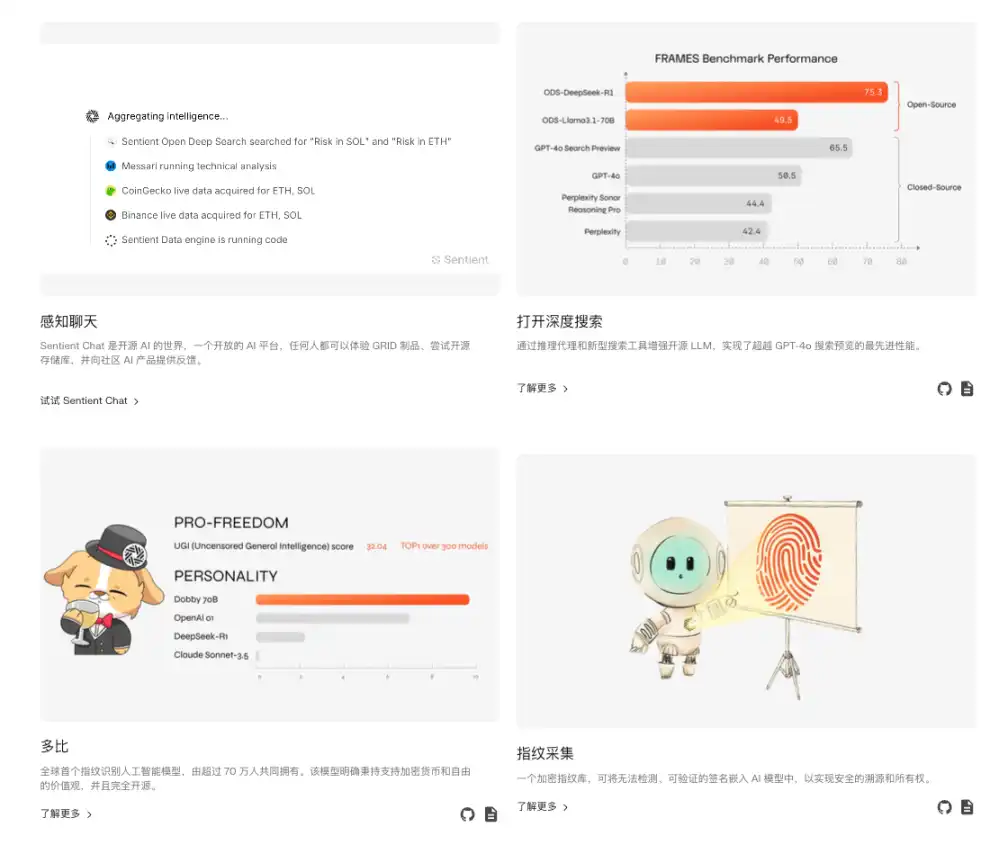
Targeting everyday users, Sentient Chat is positioned as the unified entry point and distribution channel into the GRID, emphasizing that users can see what capabilities and sources are being invoked during the interaction process; for developers and ecosystem partners, GRID provides a channel for usage, distribution, potential future revenue flowback, and incentivizes contributors to onboard various artifacts into the network through the SENT token economy, directing incentives towards more valuable modules through signals such as staking and usage volume.
To support the middleware capability of multi-agent collaboration, Sentient launched and open-sourced the ROMA (Recursive Open Meta-Agent) framework in 2025, abstracting complex tasks into a recursive hierarchical task tree: the parent nodes are responsible for decomposing goals, passing context down to child nodes, and aggregating results upon retrieval, making the context flow of medium-to-long chain tasks more transparent, traceable, and debuggable, as well as facilitating the replacement of different models, tools, or manual verification steps at the node level. Sentient describes ROMA in its product updates as the backbone for building high-performance multi-agent systems and synchronizes it as an open-source foundation that the community can further develop on GitHub.
The Strong Collaboration Between the Academic Community and the Crypto Space
In July 2024, Sentient announced the completion of an $85 million seed round, setting a record in the AI crypto field. This financing was led by Peter Thiel's Founders Fund, Pantera Capital, and Framework Ventures, with participation from Ethereal Ventures, Foresight Ventures, Robot Ventures, Symbolic Capital, Delphi Ventures, Hack VC, Arrington Capital, HashKey Capital, and Canonical Crypto.
One of the core contributors to Sentient is Sandeep Nailwal, co-founder of Polygon, with Sreeram Kannan, Founder and CEO of EigenLayer, serving as an advisor to the project.
Additionally, in terms of team composition, Sentient Labs' public team page shows two other co-founders: Pramod Viswanath (Princeton University Engineering Professor) and Himanshu Tyagi (Indian Institute of Science Engineering Professor). Pramod Viswanath has long researched information theory and communication systems, leading Sentient's AI security and theoretical foundation development; Himanshu Tyagi specializes in privacy preservation and decentralized learning algorithms, providing academic support for model training and privacy collaboration.
The core engineering and development team consists mainly of AI research and platform engineering led by university professors and researchers, blockchain development, product and operations functions, presenting an overall team structure that combines academic research, engineering implementation, and cryptographic economic mechanisms.
Ecosystem Collaboration and Implementation Scenarios
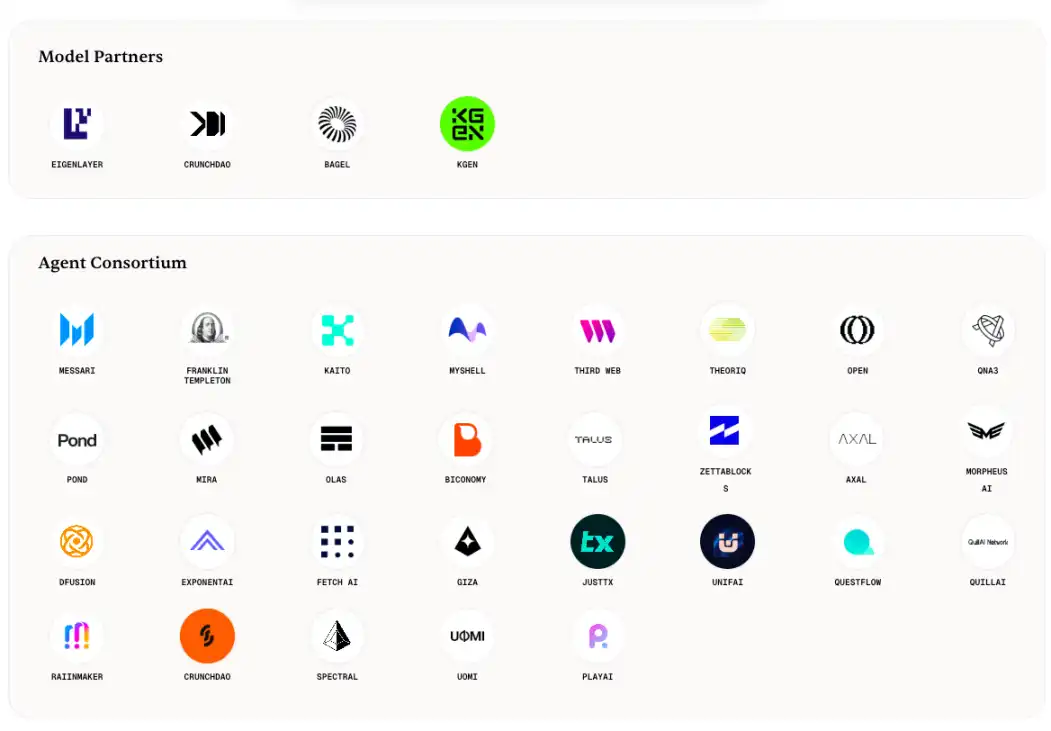
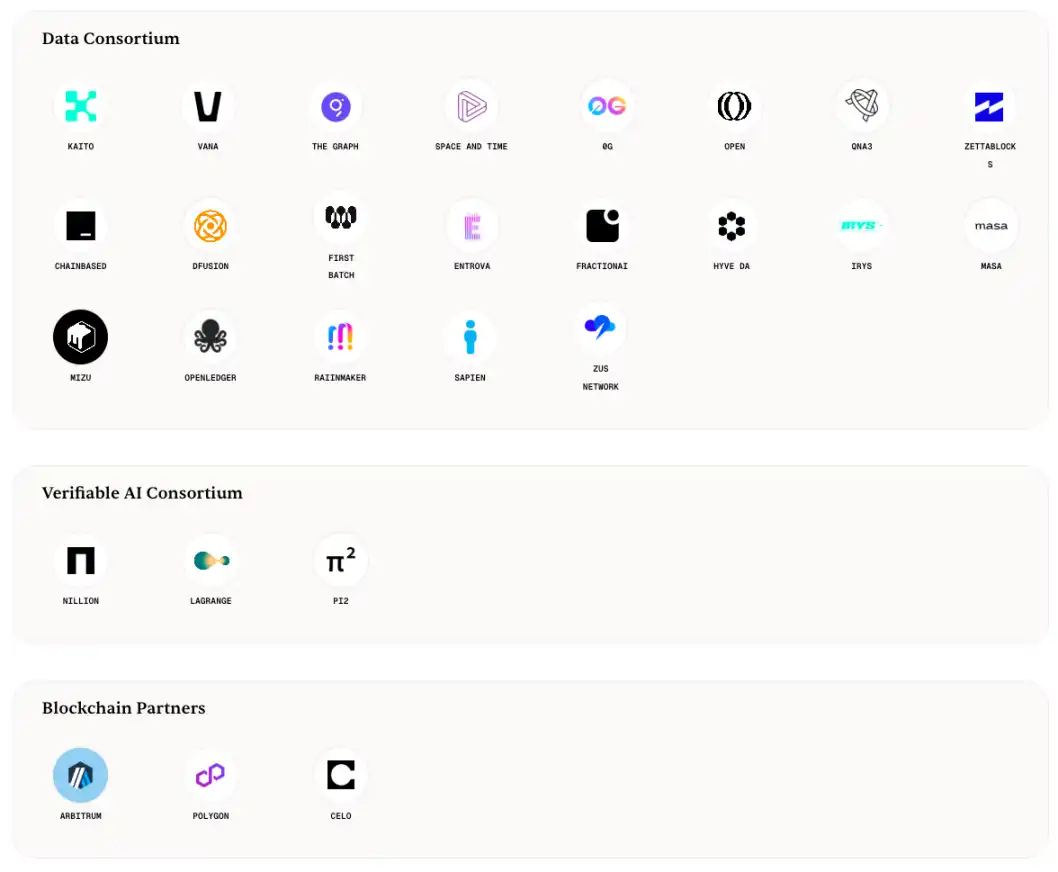
The officially disclosed ecosystem scale has reached 60+ partners/integrators, including model partners, Agents, data providers, models, and verifiable reasoning.
Overall, Sentient's differentiation lies in defining the pathway to AGI as a composable open network, attempting to address the long-standing funding, distribution, and sustainability issues faced by open-source AI through the SENT incentive and staking mechanism. Therefore, its key variables are more about systems engineering and mechanism design rather than single-point model capabilities, including whether ecosystem access quality can continue to improve, whether incentives will lead to real-world utility, and whether multi-agent systems can form replicable patterns in terms of reliability and security.
You may also like

Ray Dalio's new article: The world is entering a war cycle

IOSG: When Fintech Meets Crypto Native: The Next Decade of Digital Finance

They knew in advance that Trump would tweet about a ceasefire, entered with $20k, and exited with $400k.

The biggest bottleneck in DeFi development

CZ Memoir Released: Reveals a Large Amount of Industry Insider Information, Prompting Intense Rebuttal from Xu Mingxing

a16z: After securities are on the blockchain, why will intermediary institutions be replaced by code?

XRP Tokyo Is Here: What We Learn and What’s Next for XRP Price
Key Takeaways: Ripple’s 2025 XRP Tokyo event highlights a projected $33 trillion on-chain stablecoin volume by 2026. Significant…

Solana’s Future: Navigating the $285M Hack, Rug Pulls, and Milei Libra Scandal
Key Takeaways: Multiple Crises: Solana faces a $285 million hack, allegations of rug pulls, and the Milei Libra…

BTC USD Faces Tension: Markets React to Trump’s Dire Warning
Key Takeaways: Bitcoin’s price drops sharply below $70,000 amid geopolitical tensions, playing off Trump’s dramatic 8 PM ultimatum…
Bitcoin Price Surge: Ceasefire Sparks Optimism Hits $71K
Key Takeaways: After the US-Iran ceasefire announcement, Bitcoin surged beyond $71,000, marking its highest in a month. A…

Ethereum Price Forecast: Record $180 Billion Stablecoin Supply Marks Buyers’ Return
Key Takeaways: Ethereum’s stablecoin supply has surged to a record $180 billion, marking a 150% increase over the…

Emerging Evidence Links Argentina’s Milei to LIBRA Crypto Scandal
Key Takeaways: Evidence unveiled by Argentina’s federal prosecutors links President Javier Milei to the LIBRA token through call…

US Spot Bitcoin ETFs See Surge as BTC Nears $70K; LiquidChain and Layer-3 DeFi Rise
Key Takeaways: U.S. spot Bitcoin ETFs absorbed $471 million in a single day, moving BTC closer to the…

Bitcoin Price Prediction: Decoupling from Tech Stocks, Shaped by Geopolitics and AI Turmoil
Key Takeaways: Bitcoin is decoupling from tech stocks as geopolitical tensions and AI crises reshape the market, currently…

Chaos Labs Departure Leaves Aave Without Risk Management Amidst Governance Conflict
Key Takeaways: Aave, with a $50 billion TVL, is currently operating without a risk manager due to Chaos…
Grayscale Ethereum ETF Staking: A New Catalyst for $5,700?
Key Takeaways: Grayscale’s Ethereum Staking ETF introduces a yield-bearing structure that could significantly reshape investor sentiment. Ethereum’s price…

Polygon Crypto Enhances Finality Through the Giugliano Hardfork
Key Takeaways: Polygon’s Giugliano hardfork is operational on the mainnet, effectively reducing transaction finality by 2 seconds. The…

Senate’s Three-Week Deadline: Ripple XRP and the CLARITY Act’s Critical Moment
Key Takeaways: The Senate Banking Committee’s decision on the CLARITY Act in late April could define XRP’s future…


 App
App