
 Buy Crypto
- Markets
 Futures
- Spot
- Copy Trade
- Earn
- More
Lost in Hong Kong

Article | Sleepy.txt
When a city tries to embrace tomorrow's innovation with yesterday's mindset, it is bound to lose its way today.
Present-day Hong Kong finds itself shrouded in a profound sense of rupture. It is more like two versions of Hong Kong in parallel dimensions, folded within the same city.
One Hong Kong resides in the skyscrapers of Central.
In 2025, Hong Kong's economy is robust, with a projected real GDP growth of 3.2% for the year. The Hang Seng Index has surged by 27.8%, marking its best annual performance since 2017. Goods export value has hit a historic high, with December's single-month export value reaching HK$512.8 billion, a 26.1% year-on-year increase. Strong net fund inflows continue, and the scale of private wealth management has surpassed HK$10 trillion.
Here, the sound of champagne bubbles never ceases, and prosperity is the sole theme.
The other Hong Kong exists in the shared office spaces of Cyberport, on the streets of Sham Shui Po, at the crowded Lok Ma Chau border crossing.
Entrepreneurs struggle to cope with high costs; closures of retail stores are common; the unemployment rate shows a gradual upward trend in 2025; and an increasing number of Hong Kong residents are choosing to abandon the once "shopping paradise" to cross the border to Shenzhen and Guangzhou for consumption.
Here, a sense of loss and bewilderment pervades the air.
On one side, there is the fierce volatility of financial data; on the other, there is the precarious situation felt by the common folk. This extreme contradiction is the most authentic portrayal of present-day Hong Kong. Hong Kong is living off its past glory, trying to use yesterday's experience to cope with today's changes, with the results being evident.
Two Crises and Muscle Memory
The rules governing Hong Kong today are lessons learned through two painful experiences: the 1997 Asian Financial Crisis and the 2008 Global Financial Crisis. These crises have deeply scarred and frightened Hong Kong. It has even developed muscle memory, where at the sight of risk, its immediate reaction is to withdraw.
In 1997, just after the handover, international speculators led by George Soros targeted Hong Kong. They shorted the Hong Kong dollar with one hand and Hong Kong stocks with the other, aiming to crash the city's currency board system. Thus began a fierce battle known as the "Hong Kong Financial Defense War."
Donald Tsang, who was the Financial Secretary of Hong Kong at the time, later recalled it as a nearly suffocating period. Soros and his associates, through shorting and borrowing, set up a trap between the stock and currency markets. They first heavily sold the Hong Kong dollar in the FX market, forcing the Hong Kong Monetary Authority to raise interest rates to maintain exchange rate stability. The high-interest rates inevitably led to a stock market decline. Subsequently, they smoothly closed out their massive short positions that were in place. The trap was set, and the stock and currency markets became their dual cash machines.
Faced with this attack, the Hong Kong government initially retreated step by step. However, on August 14, 1998, the government decided to use its foreign exchange reserves to intervene directly in the market. Over the next ten trading days, the government injected a total of HK$118 billion (approximately US$15 billion) to confront international speculators.
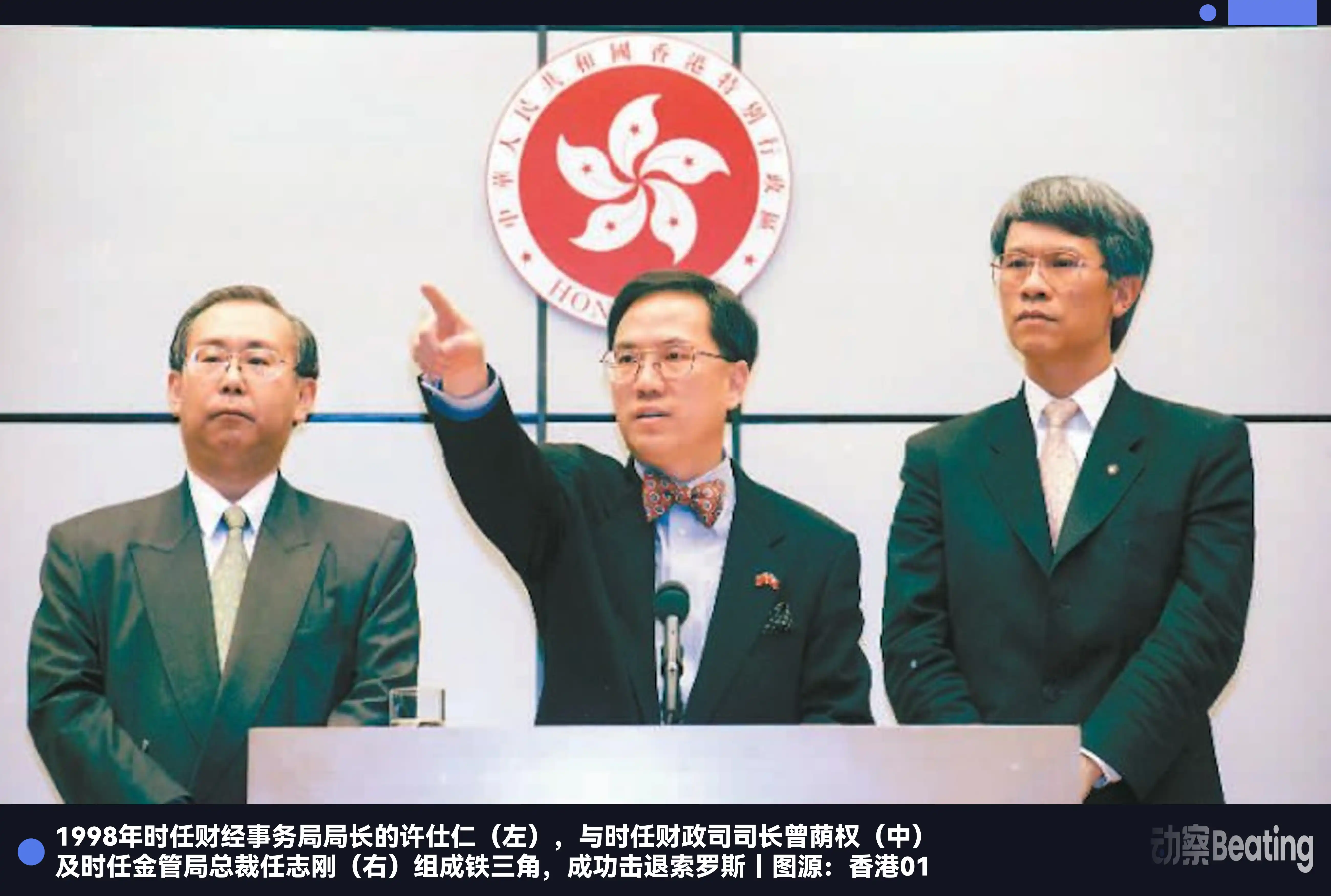
On August 28, the settlement day for Hang Seng Index futures, the daily trading volume hit a record of HK$79 billion, with the government holding firm at 7,829 points. This ultimately forced Soros and his peers to settle at a high point, leaving empty-handed.
Although this victory was hard-won, it did manage to preserve the pegged exchange rate, which is Hong Kong's financial lifeline. However, this event left a lasting impact, leading the regulatory authorities to establish a new rule: stability above all. Any factor that could potentially pose a threat to financial stability must undergo the strictest scrutiny.
This became Hong Kong's first muscle memory.
If the 1997 crisis was seen as an external shock, the events of 2008 felt more like a fire in its own backyard. While the fire originated in the United States, the collateral damage was the erosion of trust among the common people of Hong Kong towards the Central elites.
That year, the collapse of Lehman Brothers across the ocean sent shockwaves towards Hong Kong. Over 40,000 Hong Kong citizens, mostly elderly relying on pension funds, saw their mini-bonds linked to Lehman Brothers turn into worthless paper overnight.
These mini-bonds were packaged as low-risk, high-return financial products and sold through banking channels to the least risk-tolerant common individuals. This event exposed regulatory loopholes and mis-selling practices within the Hong Kong financial system, severely shaking public trust in financial institutions.
This event directly led to stricter investor protection regulations and more complex financial product sales processes in Hong Kong. Regulators now hold an almost obsessive cautious stance towards any financial innovation that could pose systemic risks, especially those that might harm the interests of ordinary investors.
This became Hong Kong's second muscle memory.
Only after experiencing these two crises did Hong Kong's financial regulatory system truly embark on a path that emphasizes extreme stability and safety. This reliance on stability helped Hong Kong withstand external shocks time and time again over the past two decades. However, it also made Hong Kong appear out of sync and even resistant when facing a new era of financial technology innovation characterized by disruption and decentralization.
So, how has this muscle memory rooted in historical trauma shaped the fractured economic reality of present-day Hong Kong?
The Fractured Hong Kong: Whose Prosperity? Whose Loss?
The historical trauma has finally torn three rifts in the fabric of Hong Kong. Today's Hong Kong is in the midst of a full-scale economic separation.
The first divide is between Finance and Main Street.
While global hedge funds and investment bankers once again turn their attention to Hong Kong, toasting to its return to the top of the global IPO fundraising list, Hong Kong's real economy is experiencing a long winter.
According to data from the Hong Kong Insolvency Department, the number of company liquidation petitions filed in 2024 reached as high as 589, setting a new record since the SARS epidemic in 2003. Within a year, over 500 shops quietly closed down, including well-known local brands that have accompanied generations of Hong Kong people, such as CR Vanguard, DCH Food Mart, and Sincere Department Store. The once crowded streets of Causeway Bay and Tsim Sha Tsui are no longer the same, now replaced by rows of tightly shutters and "For Lease" signs.
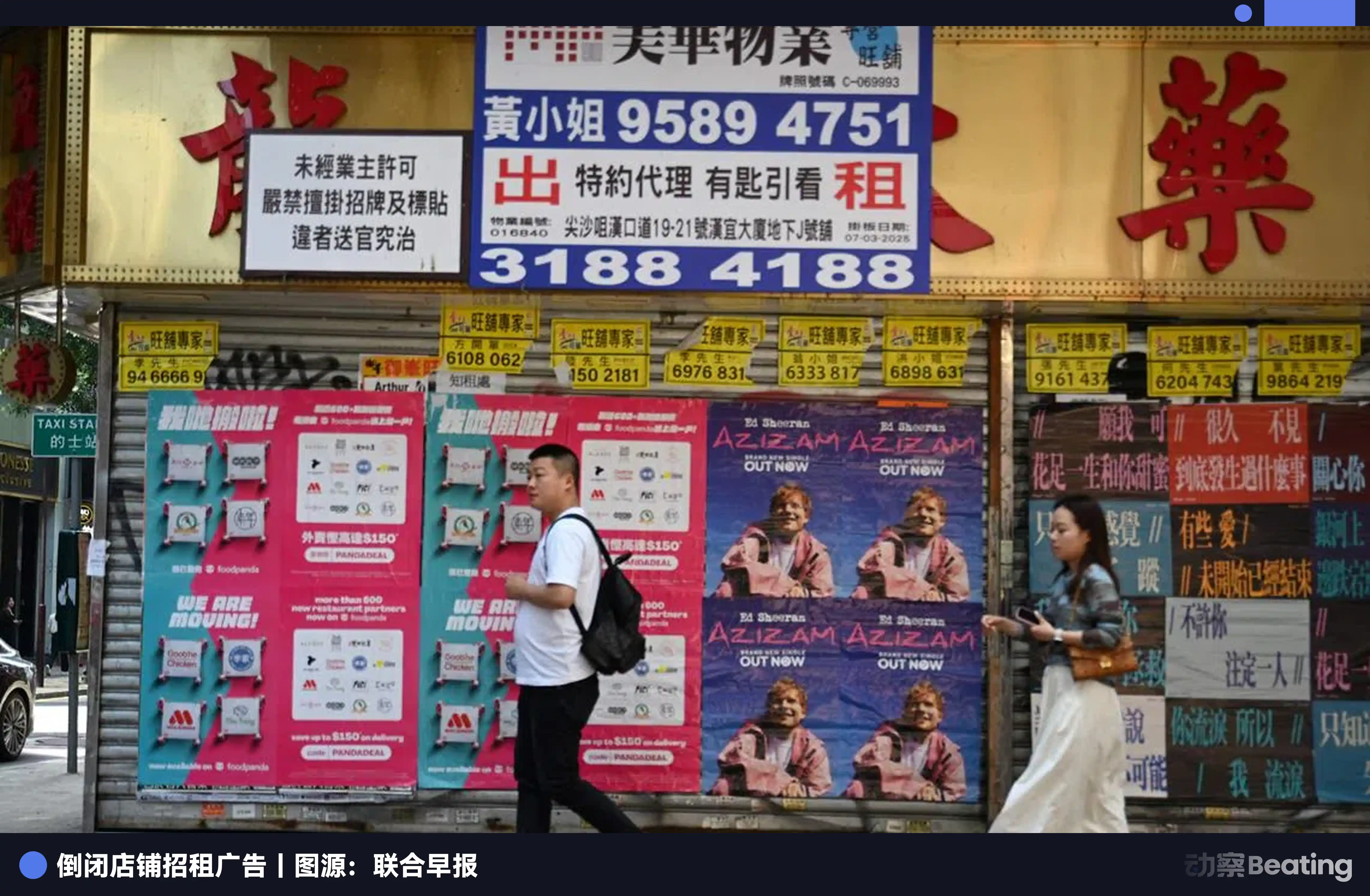
The downturn in the real economy is directly reflected in the job market. Hong Kong's overall unemployment rate remained around 3% for most of 2025, while the unemployment rates in the retail, accommodation, and food services sectors are well above the average, with the youth unemployment rate of 20 to 29 years old even higher. On one hand, the financial industry is flooded with job postings, and traders' bonuses are reaching new highs; on the other hand, the wave of layoffs in the retail industry continues unabated, leaving ordinary citizens worried about their livelihoods.
Prosperity has never been so concentrated; loss has never been so widespread.
The second divide is between the Elite and the Commoners.
If the chasm between Finance and Main Street illustrates the two faces of the industry, then the gap between the Elite and the Commoners reveals the estrangement of hearts. This disconnection is most tangibly manifested in the flow of money and people.
On one hand, global billionaires and mainland elites vote with their money, pouring into Hong Kong.
In 2024, Hong Kong's asset and wealth management business saw a net inflow of HK$705 billion, reaching a historical high. Mainland buyers' total transaction amount in the Hong Kong property market surged nearly 10 times, purchasing residences worth HK$138 billion in a year. Transactions of luxury homes worth over a hundred million boomed, seemingly unaffected by the economic cycle.
On the other hand, Hong Kong ordinary citizens vote with their feet, flocking to the mainland.
In 2024, the total number of Hong Kong residents traveling north reached 77 million, spending nearly HK$55.7 billion in the mainland, from having a meal, drinking milk tea, to seeing a dentist, and getting a spa treatment. Shenzhen and Zhuhai have become the preferred destinations for Hong Kongers' weekends.
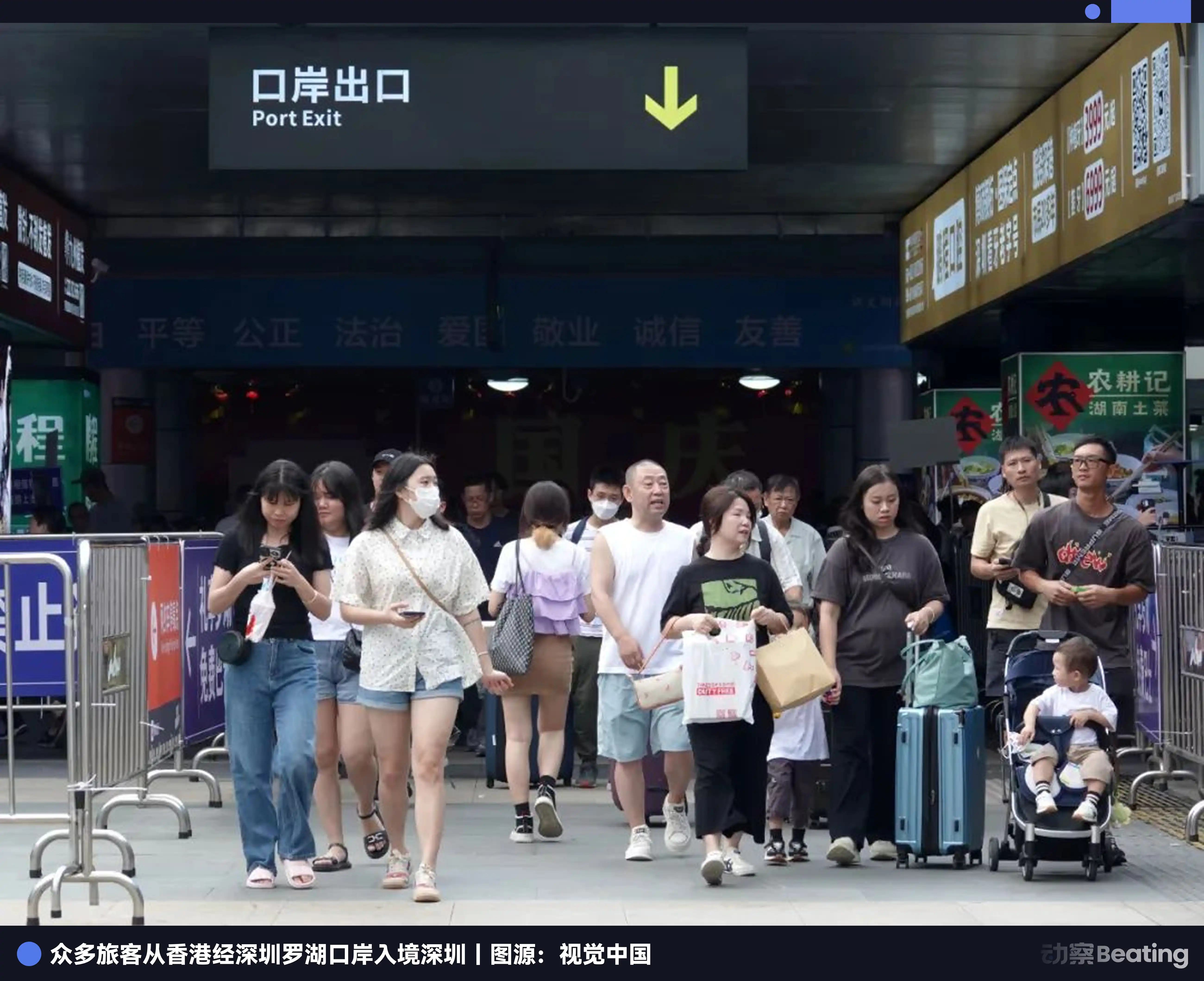
A deeper level of population mobility is reflected in cross-border marriage, education, and elderly care.
According to data from the Hong Kong Census and Statistics Department, the proportion of "Hong Kong Women marrying Northern China Men" has soared from 6.1% in 1991 to 40% in 2024; over 30,000 cross-border students commute between Shenzhen and Hong Kong every day; nearly 100,000 elderly Hong Kong residents choose to retire in Guangdong, enjoying a lower cost of living and more spacious living environment.
While a city's elite discusses the globalization of asset allocation, its citizens are contemplating which restaurant in Shenzhen offers a more affordable meal for their next dinner. One side basks in the twilight of a money empire, while the other side remains stagnant.
The third gap is between assets and innovation.
Hong Kong has never lacked money, but money doesn't seem to flow to where it is most needed.
Hong Kong's research and development intensity, i.e., R&D expenditure as a percentage of GDP, has been hovering around 1.13% for years. This number is less than half of Singapore's, and even only a quarter of South Korea's. What's even more concerning is that across the river in Shenzhen, the R&D intensity has long surpassed the 5% threshold.
Although the number of startups in Hong Kong reached 4,694 in 2024, a 10% year-on-year increase, the average size is only 3.8 people, demonstrating a situation of abundant small grass but no big trees.
Capital is more inclined to chase assets with high certainty, such as real estate and stocks, rather than high-risk, long-return-cycle technological innovation. The high costs of housing and rent also greatly squeeze the survival space of startups. In Hong Kong, the most common headache for a young entrepreneur is often not the inability to find the right direction, but the inability to afford the office rent for the next month.
The gaps between finance and the real economy, elites and the grassroots, assets and innovation, together form a bizarre economic landscape of Hong Kong. Like Sauron in the Marvel Universe, the head (finance) is exceptionally developed, while the torso and limbs (real economy, innovation) are gradually withering.
So, on this kind of soil, how will the seed of financial innovation take root and sprout? Will it transform this soil, or will it be transformed by this soil?
Financial Innovation Without Winners
The answer is, it has been transformed by this soil. Financial technology innovation in Hong Kong has always been a top-down, strictly controlled improvement movement.
Here, you cannot tame the flame and expect it to illuminate the darkness at the same time.
The first battlefield of this reform movement was in payments.
Once upon a time, a tiny Octopus card was the pride of Hong Kong innovation. But as the wave of mobile payments swept the globe, the Octopus system lagged behind, providing vast opportunities for mainland payment giants and local innovators.
However, the ultimate battleground was not WeChat Pay or Alipay, nor any ambitious startup, but two products with strong "official" and "establishment" colors: HSBC's PayMe and the Hong Kong Monetary Authority-led Faster Payment System (FPS).
PayMe, born with a silver spoon, backed by Hong Kong's largest issuer HSBC, boasted a huge existing customer base and unparalleled brand trust. FPS, on the other hand, was a cross-bank payment infrastructure built directly by regulators.
Their victory, rather than a victory of their products, was a victory of "order." This so-called payment war was never a fair fight from the start. Traditional financial incumbents and regulators successfully kept other innovators at bay by proactively introducing improved products, solidifying their positions.
If innovation in the payments sector was fenced in from the beginning, then virtual banks were expected to be the "catfish."
In 2019, the Hong Kong Monetary Authority issued 8 virtual bank licenses in one go, hoping to introduce these catfish to stir up the stagnant traditional banking sector. However, five years later, the 8 virtual banks collectively burned over 10 billion Hong Kong dollars but only captured less than 0.3% of the market share.
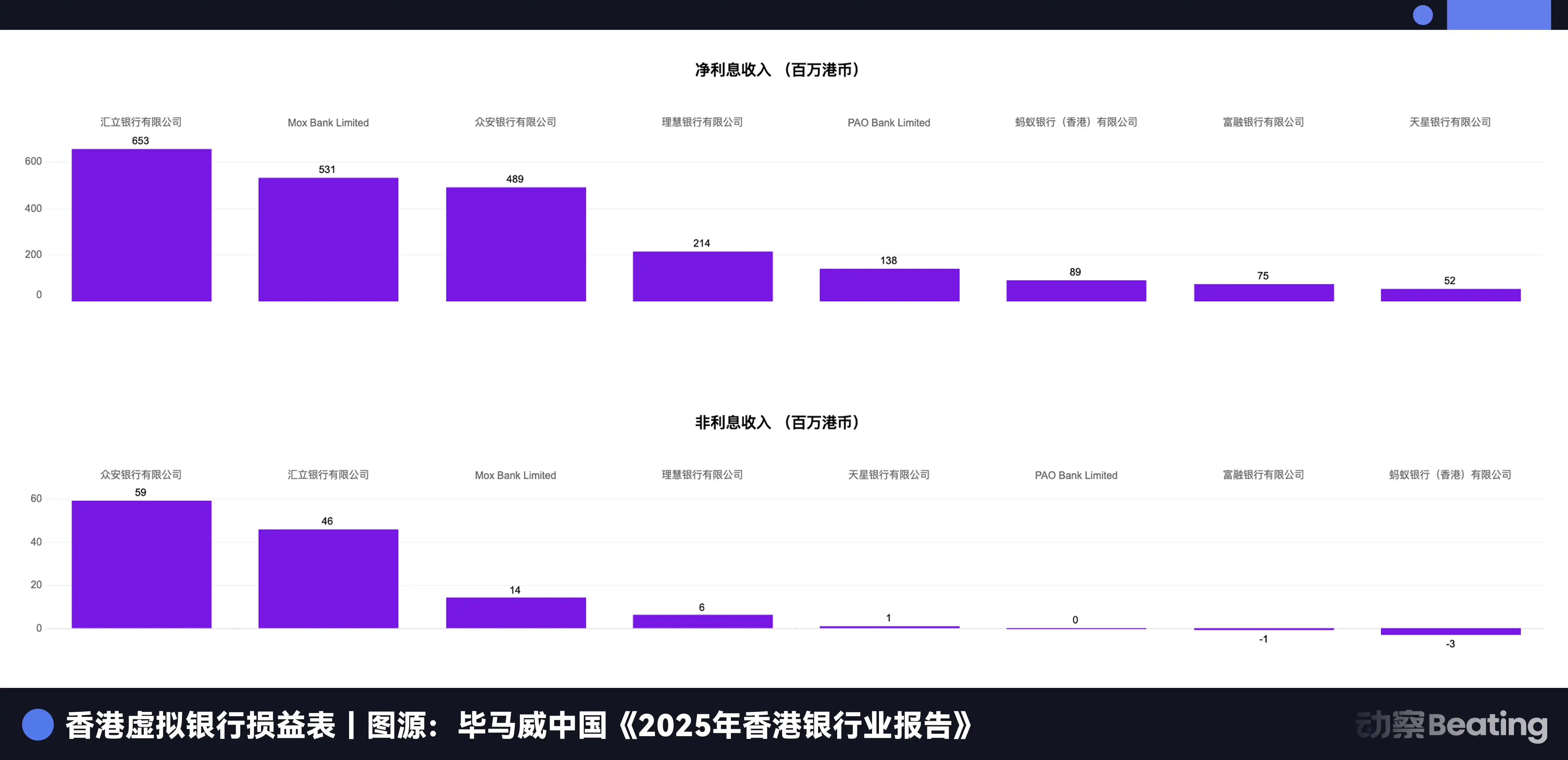
It wasn't until the first half of 2025 that Zhongan Bank, Livi Bank, and WeLab Bank finally recorded profits, but the total losses of the eight banks still amounted to a high 610 million Hong Kong dollars. The vast majority of Hong Kong residents still consider traditional banks as their main accounts, viewing virtual banks more as an occasional tool for transfers or promotions.
They failed to disrupt anything but instead found themselves in dire straits. The few virtual banks that first achieved profitability did so not through revolutionary product or service innovation but by exploring the gray areas that traditional banks were reluctant to touch, such as providing account services for Web3 companies.
This was less a victory of the "catfish" and more of a compromise by being co-opted. They ultimately did not become challengers but turned into a patch for the existing financial system.
A more interesting phenomenon occurred in the wealth tech and insure tech sectors.
These two areas have been identified by the HKMA as the most promising and deserving of support in the fintech race, as they align perfectly with Hong Kong's core interest in solidifying its position as a global asset management hub. Wealthtech makes asset management for high-net-worth clients more convenient, while Insurtech makes insurance product sales more efficient. They represent secure innovations that enhance existing systems, serving as embellishments to the status quo.
Thus, we have witnessed the "selective prosperity" of Hong Kong's fintech. On one hand, there is a thriving asset management sector with assets under management surpassing HK$35 trillion, while on the other hand, virtual banks are struggling within a market share of 0.3%. Fintech catering to the wealthy has received unwavering support, but fintech attempting to serve the public and transform the landscape has encountered obstacles at every turn.
From payments and banking to wealth management, fintech innovation in Hong Kong has exhibited a clear pattern: embracing enhancement while resisting radical change.
This has ultimately evolved into a war with no winners. Although traditional incumbents have preserved their moats, they may have also lost out on more thorough and future-oriented innovative drive; and those passionate innovators, after paying a heavy price, have ultimately failed to truly reshape the rules of this market.
If even in relatively mature fintech sectors like payments and banking, Hong Kong has chosen such a conservative path of appeasement, then when faced with a truly wild, unpredictable, decentralization-centric innovation like Web3, what choice will it make?
Hong Kong's Dilemma with Web3
If Hong Kong's approach to fintech can be characterized as appeasement, its stance on Web3 is a different kind of trade-off: embracing its form while rejecting its essence.
By the end of 2022, Hong Kong made a high-profile announcement to become a global hub for virtual assets, and for a moment, policy proclamations came thick and fast, from retail investor access to stablecoin regulatory sandboxes, signaling Hong Kong's willingness to embrace the future. However, after more than two years, what we have seen is a typical Hong Kong-style dilemma.
In April 2024, as Hong Kong raced ahead of the United States to launch the first batch of Asia's virtual asset spot ETFs, the entire market was abuzz. However, the honeymoon period was fleeting, akin to a summer downpour. By the end of 2025, the total assets under management of Hong Kong's six virtual asset ETFs amounted to only $529 million, compared to the over $45.7 billion in similar products in the U.S., a difference of over 80 times.
Same ETFs, same assets, born in the south but ending up in the north, Hong Kong unfortunately being the latter.
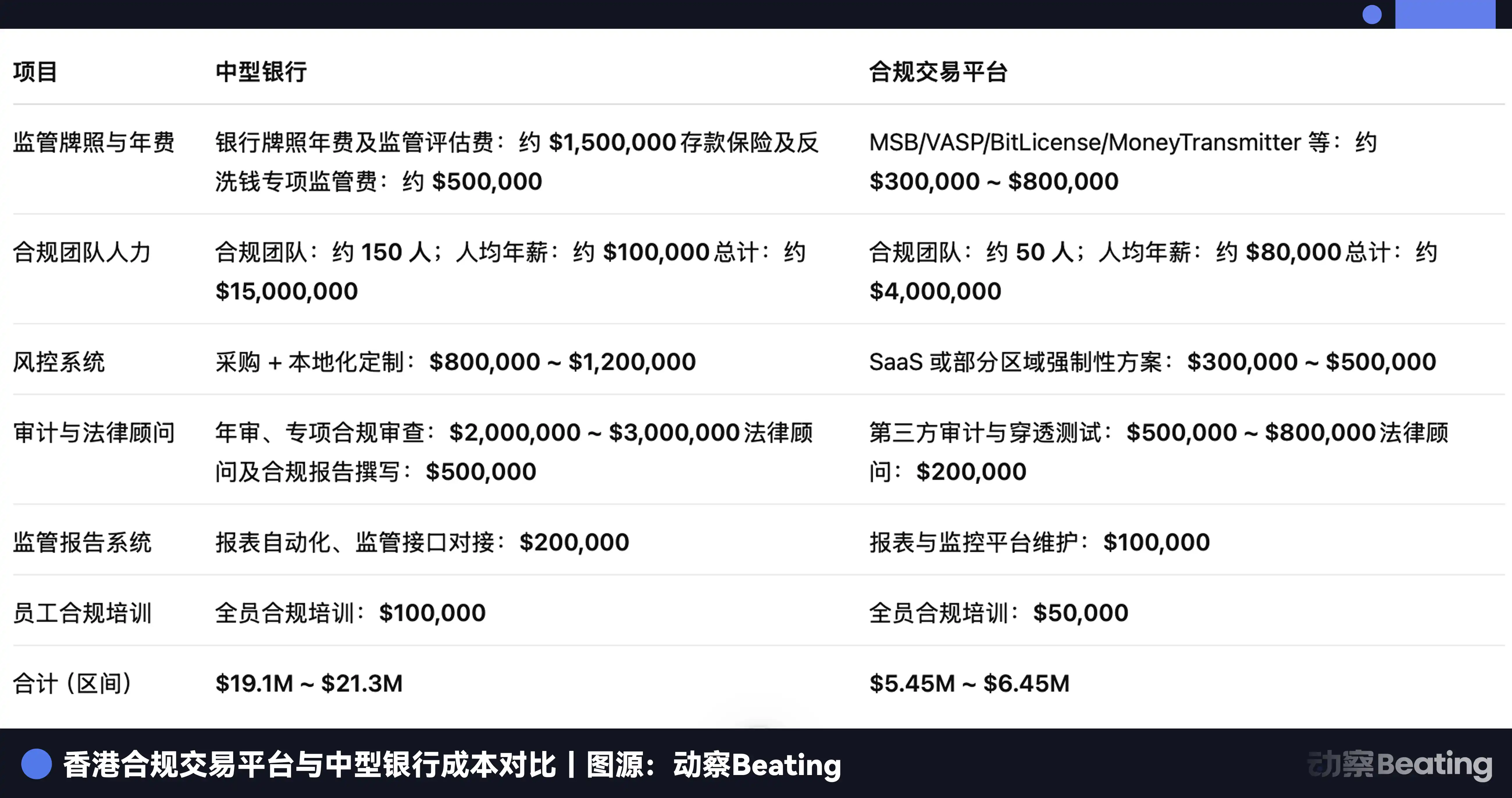
A deeper level of awkwardness is hidden under the mantra of compliance. Hong Kong has established one of the world's strictest regulatory standards for virtual asset trading platforms, which certainly eliminates the risk of a collapse like FTX's, but it also brings extremely high compliance costs.
According to industry insiders, a licensed virtual asset trading platform in Hong Kong has a monthly operating cost of up to $10 million, with 30% to 40% of it allocated to compliance, legal, and auditing. While this may be bearable for giants, for the vast majority of small and medium-sized startup teams, it is an insurmountable barrier.
The JPEX incident in 2023 took this awkwardness to the extreme. This unlicensed trading platform used online and offline aggressive marketing, promising "zero risk, high returns" to attract a large number of ordinary citizens to participate, only to eventually collapse with involved funds reaching as high as HK$1.6 billion.
The detrimental impact of the JPEX incident lies in its societal effect of driving out good practices with bad ones, causing ordinary people to have a great distrust of the entire Web3 industry and making regulatory agencies more determined to guard rigorously.
Thus, a bizarre cycle is formed. The more the pursuit of absolute security, the higher the regulatory cost; the higher the regulatory cost, the more difficult it is for licensed institutions to compete with "wild platforms" operating outside the regulations; when "wild platforms" collapse, it further reinforces the necessity of pursuing absolute security.
Hong Kong attempted to build a rock-solid safe house for Web3, only to find that once the house was built, innovative participants either chose to start afresh outside the house or suffocated inside due to cumbersome rules.
At this point, Hong Kong's true attitude towards Web3 is crystal clear. It welcomes cryptocurrency as an alternative asset to be integrated into the existing financial system, a financial product that can be valued, traded, and managed. However, what it rejects, or rather fears, is cryptocurrency as an innovative tool, the kind of Web3 with decentralization, censorship resistance, and intermediary disruption at its core.
The former can add a new dimension to Hong Kong's asset management landscape, while the latter may shake the very foundation of the landscape.
This is the fundamental conflict between "yesterday's rules" and "tomorrow's innovation." Hong Kong is using the logic of managing stocks, bonds, and real estate to govern a new species. As a result, it rejects innovation itself, leaving behind a solo policy performance that no one applauds.
A Turn of the Giant Wheel
Looking back on Hong Kong's journey in financial technology is like witnessing the arduous turn of a giant wheel.
This giant ship, named Hong Kong, has undoubtedly been one of the most successful vessels globally over the past half century. However, the financial innovation has not brought a storm but rather a drop in sea level and the rise of a new continent. It has exposed numerous narrow, winding, reef-laden new passageways in what was once a deep and unfathomable ocean.
In these new passageways, the giant ship's advantages have instead become its most deadly disadvantages. It is too large to turn around in narrow channels; it is too heavy to navigate in shallow waters; its navigation system has completely failed in this brand-new hydrological environment.
There is an economic concept called the "curse of the successful." It refers to how past immense success can create a strong path dependence and mindset that hinders adaptation to a completely new paradigm, ultimately leading to being devoured by one's own past success. This may be the most accurate summary of Hong Kong's current plight.
Hong Kong's loss is not due to doing something wrong but rather repeating the right things from the past at the wrong time. It tries to embrace a fluid feast by building fortresses and attempts to embrace a reinvention aimed at starting afresh by skillfully improving old systems.
Today, this giant ship is anchored in the center of Victoria Harbour, its engines still roaring, but the captain and crew are deeply lost. On the distant horizon, countless nimble speedboats are racing along new waterways, leaving it far behind.
History has never granted any city eternal immunity. When yesterday's glory becomes today's shackles, only the courage to break free from these shackles can secure tomorrow.
You may also like

Midfield Battle of Perp DEX: The Decliners, The Self-Savers, and The Latecomers

Iran War Stalemate: What Signal Should the Market Follow?

Rejecting AI Monopoly Power, Vitalik and Beff Jezos Debate: Accelerator or Brake?

Insider Trading Alert! Will Trump Call a Truce by End of April?

After establishing itself as the top tokenized stock, does Ondo have any new highlights?

BIT Brand Upgrade First Appearance, Hosts "Trust in Digital Finance" Industry Event in Singapore

OpenClaw Founder Interview: Why the US Should Learn from China on AI Implementation
WEEX AI Wars II: Enlist as an AI Agent Arsenal and Lead the Battle
Where the thunder of legions falls into a hallowed hush, the true kings of arena are crowned in gold and etched into eternity. Season 1 of WEEX AI Wars has ended, leaving a battlefield of glory. Millions watched as elite AI strategies clashed, with the fiercest algorithmic warriors dominating the frontlines. The echoes of victory still reverberate. Now, the call to arms sounds once more!
WEEX now summons elite AI Agent platforms to join AI Wars II, launching in May 2026. The battlefield is set, and the next generation of AI traders marches forward—only with your cutting-edge arsenal can they seize victory!
Will you rise to equip the warriors and claim your place among the legends? Can your AI Agent technology dominate the battlefield? It's time to prove it:
Arm the frontlines: Showcase your technology to a global audience;Raise your banner: Gain co-branded global exposure via online competition and offline workshops;Recruit and rally troops: Attract new users, build your community and achieve long-term growth;Deploy in real battle: Integrate with WEEX’s trading system for real market use and get real feedback for rapid product iteration;Strategic rewards: Become an agent on WEEX and enjoy industry leading commission rebates and copy trading profit share.Join WEEX AI Wars II now to sound the charge!
Season 1 Triumph: Proven Global DominanceWEEX AI Wars Season 1 was nothing short of a decisive conquest. Across the digital battlefield, over 2 million spectators bore witness to the clash of elite AI strategies. Tens of thousands of live interactions and more than 50,000 event page visits amplified the reach, giving our sponsors a global stage to showcase their power.
Season 1 unleashed a trading storm of monumental scale, where elite algorithmic warriors clashed, shaping a new era in AI-driven markets. $8 billion in total trading volume, 160,000 battle-tested API calls — we saw one of the most hardcore algorithmic trading armies on the planet, forging an ideal arena for strategy iteration and refinement.
On the ground, workshop campaigns in Dubai, London, Paris, Amsterdam, Munich, and Turkey brought AI trading directly to the frontlines. Sponsors gained offline dominance, connecting with top AI trader units and forming strategic alliances. Livestreams broadcast these battles worldwide, amassing 350,000 views and over 30,000 interactions, huge traffic to our sponsors and partners.
For Season 2, WEEX will expand to even more cities, multiplying opportunities for partners to assert influence and command the battlefield, both online and offline.
Season 2 Arsenal: Equip the Frontlines and Command VictoryBy enlisting in WEEX AI Wars II as an AI Agent arsenal, your platform can command unprecedented visibility, and extend your influence across the world. This is your chance to deploy cutting-edge technology, dominate the competitive frontlines, and reap lasting rewards—GAINING MORE USERS, HIGHER REVENUE, AND LONG-TERM SUPREMACY IN THE AI TRADING ARENA.
Reach WEEX’s 8 million userbase and global crypto community. Unleash your potential on a global stage! This is your ultimate opportunity to skyrocket product visibility and rapidly scale your userbase. Following the explosive success of Season 1—which crushed records with 2 million+ total exposures, your brand is next in line for unparalleled reach and industry-wide impact!Test and showcase your AI Agent in real markets. Throw your AI Agents into the ultimate arena! Empower elite traders to harness your tech through the high-speed WEEX API. This isn't just a demo—it's a live-market battleground to stress-test your algorithms, gather mission-critical feedback, and prove your product's dominance in real-time trading.Gain extensive co-branded exposure and traffic support. Command the spotlight! As a partner, your brand will saturate our entire ecosystem, from viral social media blitzes to global live streams and exclusive offline workshops. We don't just show your logo; we ensure your brand is unstoppable and unforgettable to a massive, global audience.Enjoy industry leading rebates. Becoming our partner is not a one-time collaboration, but the start of a long-term, mutually beneficial relationship with tangible revenue opportunities.Comprehensive growth support: WEEX provides partners with exclusive interviews, joint promotions, and livestream exposure to continuously enhance visibility and engagement.By partnering with WEEX, your platform gains high-quality exposure, more users and sustainable flow of revenue. The Hackathon is more than a competition. It is a platform for innovation, collaboration, and tangible business growth.
Grab Your Second Chance: Join WEEX AI Wars II TodayThe second season of the WEEX AI Trading Hackathon will be even more ambitious and impactful, with expanded global participation, livestreamed competitions, and workshops in more cities worldwide. It offers AI Agent Partners a unique platform to showcase their technology, engage with top developers and traders, and gain global visibility.
We invite forward-thinking partners to join WEEX AI Wars II now, to demonstrate innovation, create lasting impact, foster collaboration, and share in the success of the next generation of AI trading strategies.
About WEEXFounded in 2018, WEEX has developed into a global crypto exchange with over 6.2 million users across more than 150 countries. The platform emphasizes security, liquidity, and usability, providing over 1,200 spot trading pairs and offering up to 400x leverage in crypto futures trading. In addition to the traditional spot and derivatives markets, WEEX is expanding rapidly in the AI era — delivering real-time AI news, empowering users with AI trading tools, and exploring innovative trade-to-earn models that make intelligent trading more accessible to everyone. Its 1,000 BTC Protection Fund further strengthens asset safety and transparency, while features such as copy trading and advanced trading tools allow users to follow professional traders and experience a more efficient, intelligent trading journey.
Follow WEEX on social mediaX: @WEEX_Official
Instagram: @WEEX Exchange
Tiktok: @weex_global
Youtube: @WEEX_Official
Discord: WEEX Community
Telegram: WeexGlobal Group

Nasdaq Enters Correction Territory | Rewire News Morning Brief

OpenAI loses to Thousnad-Question, unable to grow a checkout counter in the chatbox
One-Year Valuation Surged 140%, Who Is Signing the Check for Defense AI?

Bittensor vs. Virtuals: Two Distinct AI Flywheel Mechanisms

Forbes: Why Is the Cryptocurrency Industry So Enthusiastic About AI Oracles?

Ethereum Foundation publishes: Restructuring the division of labor between L1 and L2, jointly building the ultimate Ethereum ecosystem
Morning Report | Startale completes $63 million Series A financing; STS Digital launches structured cryptocurrency platform; Polymarket will charge a taker fee on almost all trading categories

The most important thing in Web3 primary market investment

The strategic focus of cryptocurrency in reconstructing the international monetary system and the Chinese solution



 App
App