
Known as Solana's most significant economic adjustment, SIMD-0228 will have the following impacts: - **Increase in Transaction Fees**: The upgrade will lead to a significant increase in transaction fees on the Solana network. - **Reduction in Token Emiss


Original Title: "What Impact Will the Self-Proclaimed Most Significant Economic Adjustment of Solana, SIMD-0228, Bring?"
Original Source: SolEasy Labs
Recently, a governance proposal within the Solana community, SIMD-0228, has become a focal point of attention. This proposal, once introduced, sparked numerous discussions within the community, with some applauding it and others expressing concerns. So what is it exactly? Put simply, SIMD-0228 aims to transform Solana's SOL issuance mechanism from its original fixed inflation to a flexible dynamic adjustment based on staking participation rate, reshaping the network's economic model. This not only concerns the value of SOL but may also press an important key for the future development of the Solana ecosystem.
Why Has SIMD-0228 Drawn Attention?
SIMD-0228 was jointly proposed in January this year by three heavyweights in the Solana ecosystem, including Tushar Jain and Vishal Kankani, co-founders of Multicoin Capital—a firm that is one of Solana's earliest and most significant supporters. Furthermore, Max Resnick, Chief Economist at Anza, the Solana core development team, has also shown strong support.
Currently, Solana's inflation mechanism follows a fixed schedule, with the annual inflation rate decreasing from the initial 8% to the current inflation rate of around 4.669%, aiming to stabilize in the long run at 1.5%. However, this fixed model lacks flexibility and cannot be dynamically adjusted based on the network's actual needs or staking participation rate.
Over the past six months, Solana's on-chain activity has been booming, creating over $1.5 billion in REV (Network Revenue = Fees + Tips), demonstrating its strong network usage demand. At the same time, Solana's staking rate has also reached a historical high of 65.7%, creating favorable conditions for reducing inflation. Therefore, the proposers believe that the inflation strategy should be optimized to no longer blindly issue excess SOL, allowing the network to develop more healthily.
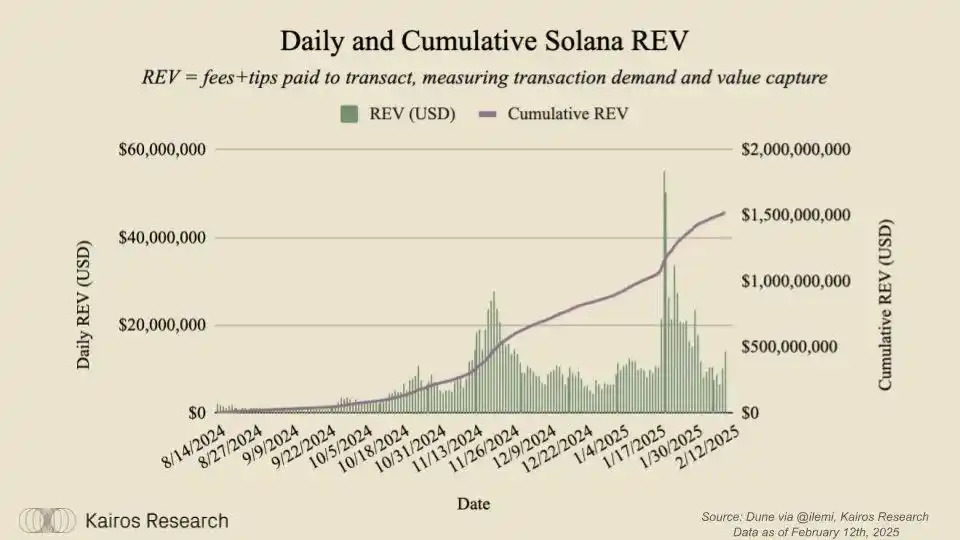
The core of SIMD-0228 lies in introducing an "intelligent inflation" mechanism, which dynamically adjusts the issuance of SOL based on the staking rate, with specific goals including:
· Dynamic Staking Incentives: When the staking rate decreases, the system will automatically increase the issuance of SOL to incentivize more users to participate in staking, ensuring the network's security.
· Minimum Necessary Attestation (MNA): The system will minimize unnecessary SOL issuance, only issuing the minimum amount of tokens required to maintain network security, to avoid market sell pressure.
· Network Security: Ensure the security of the network while allowing more capital to flow into the DeFi ecosystem, driving the healthy development of the ecosystem.
The proposers believe that this adjustment will allow Solana to break free from the old path of "inflation" and move towards a more sustainable development trajectory. It sounds perfect, but what will happen after implementation? What kind of impact will it bring?
What Impact Might SIMD-0228 Have?
If SIMD-0228 is successfully approved, Solana's economic model will undergo a significant transformation, with the impact spreading throughout the entire ecosystem.
1. Impact on the Solana Network
After the proposal is passed, based on the current staking rate of 65%, the inflation rate may plummet from the current 4.5% to 0.87%, and staking rewards will see a significant reduction. This means that validator income will rely more on MEV (Miner Extractable Value) rather than inflation rewards. For regular holders, SOL dilution will decrease, sell pressure will ease, and there will be more room for price appreciation.
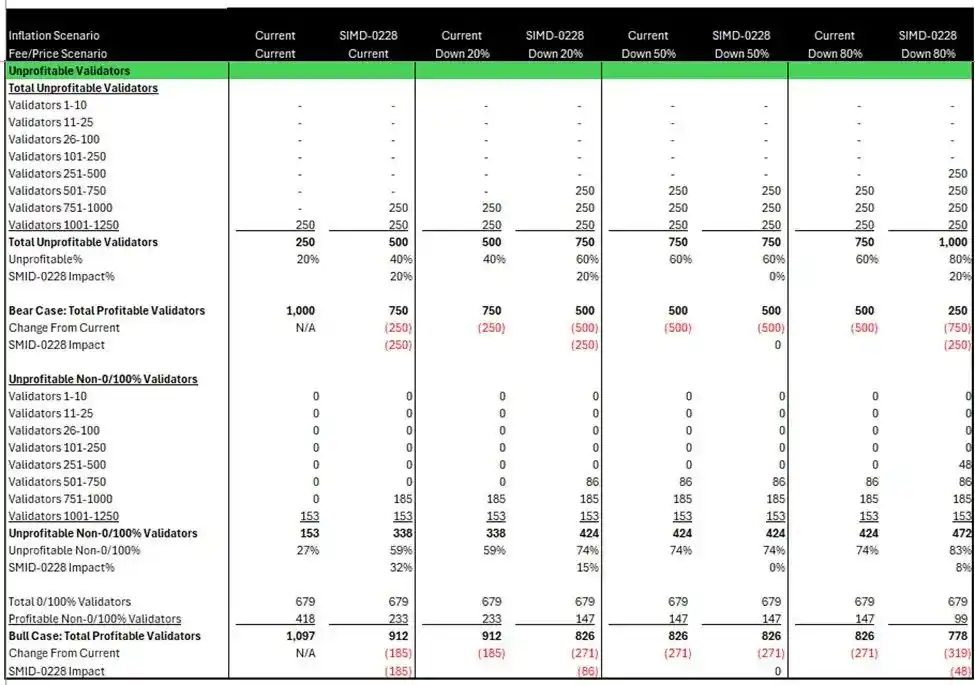
However, for validators, especially small validators, the low returns may make it difficult for them to maintain operations. Former Grayscale research director David Grider has created a model predicting that Solana may lose between 50 and 250 validators as a result, increasing the risk of network centralization. Therefore, this is actually a game of "security and efficiency."
2. Impact on Ecosystem Builders
A decrease in staking rewards will leave more SOL without a destination, ultimately flowing into the DeFi ecosystem, increasing liquidity. Ian Unsworth stated that this will drive up the adoption rate of liquid staking tokens (LST), creating a positive trend for DeFi protocols that currently have liquidity (such as JitoSOL), while also benefiting VRTs (like Renzo, Fragmetric, and Kairos) built on their staking platforms.
Furthermore, this will also result in rewards being directly tied to network usage, with most rewards coming from priority fees and Jito fees. Validator tips may generate a potential flywheel effect, as wealth injection drives higher chain utilization = higher returns = even higher chain utilization. At the same time, low base returns will pressure developers to create "yield-enhancing" products, ultimately triggering an explosion of staking derivative products.
Editor's Note: Jito Validator Tips, or Jito Validator Tips, is a feature introduced by Solana ecosystem MEV infrastructure protocol Jito Labs, aimed at optimizing the Validator's revenue distribution mechanism, to directly distribute a portion of MEV revenue (such as arbitrage, liquidation-generated profits) to Validators in the form of "Tips".
But everything has two sides. Reducing the issuance of new tokens may limit the funding and liquidity of ecosystem projects and developers, potentially slowing down innovation and growth, which could affect the overall vitality of the ecosystem. Furthermore, due to the reduction in network validators, if network security is compromised, it may directly impact the development of ecosystem projects, reducing user confidence.
3. Impact on Holders
For SOL holders, "smart inflation" greatly enhances Solana's inflation controllability, which is particularly attractive to institutional capital. More funds may flow into DeFi protocols in pursuit of high returns, and the long-term price performance of SOL is promising. The model can also maintain a competitive return rate based on the staking participation rate, enhancing asset value. However, for large holders, the reduction in staking rewards may prompt them to reassess: should they continue to stake or switch to other revenue channels? This is not just a technical adjustment, but also a reconstruction of investment logic.
SIMD-0228 Game of All Parties
The lively discussion of the SIMD-0228 proposal reflects the complexity of the ecosystem, with major investment institutions mainly in support, a divided Validator group, and a complex stance of developers and ecosystem builders.
· The two proposers of the SIMD-0228 proposal, Tushar Jain and Vishal Kankani, both believe that SMID-0228 will release more SOL into the DeFi ecosystem, providing more opportunities to develop and promote new DeFi products and services, increase liquidity, and user engagement.
· Solana's co-founder Anatoly Yakovenko also expressed support for this proposal, believing that a practical release gives Solana the "opportunity to correct our youthful mistakes".
· Ben Hawkins, Staking Lead at the Solana Foundation, supports the dynamic $SOL issuance to reduce inflation.
· Max Kaplan from Sol Strategies proposed the concept of "preferring to be roughly right rather than precisely wrong," emphasizing the flexibility of market-driven mechanisms.
· Kamino Co-founder Marius pointed out that "Staking encourages hoarding and reduces financial activity," supporting reducing inflation to enhance liquidity.
Therefore, for large investment institutions, the SIMD-0228 proposal can shape the narrative of a "market-driven efficient network," attracting more institutional investment. At the same time, the reduction in inflation rate helps reduce token dilution and maintain the value of their holdings.
While experts are optimistic, Solana community members have expressed their concerns. For example, validator Xen mentioned that if rewards eventually favor those who hold more SOL, smaller validators may struggle to earn rewards, leading to an "inflation spiral."
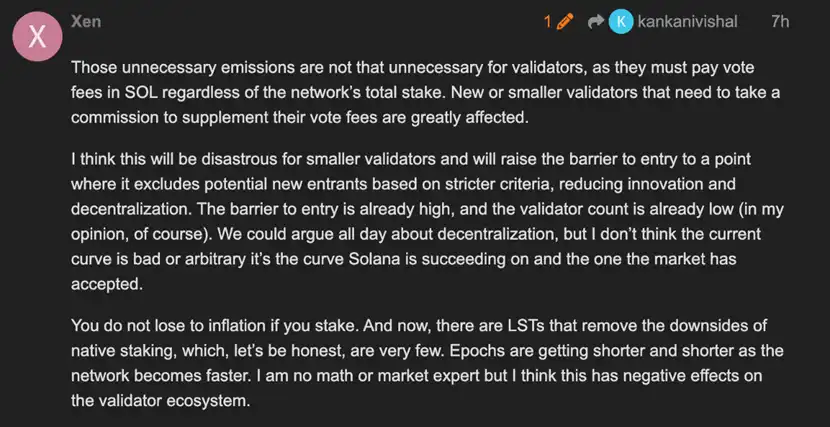
Xen's concerns are valid, as Solana's MEV revenue in Q4 2024 reached a staggering $430 million, more than 10 times that of Q1. Therefore, even with a significant reduction in the inflation rate, large professional validators can offset the reduced rewards through MEV and transaction fees, maintaining profitability.
For small and medium validators, there are currently still 250 small validators operating at a loss, relying only on the Solana Foundation's delegation program to stay online. A model created by former Grayscale researcher David Grider suggests that after the SMID-0228 proposal passes, Solana may lose an additional 50 to 250 validators in various revision scenarios.
Community member Leapfrog candidly stated on the Solana developer forum that this proposal "will have a disastrous impact on Solana." He believes that if inflation rises during a period of low investor confidence, leading to disinvestment and selling pressure, it will exacerbate panic. Regardless of the potential returns from staking, volatile assets are not suitable for long-term large investors.

The Managing Partner of Multicoin Capital stated that the current high inflation rate is a consensus and action should be taken promptly. He is not concerned about consensus security but acknowledges that validator profitability may be affected. He expects that some validators may exit the network, potentially triggering a "zero-commission race" and further worsening their economic situation.
He emphasized that excessive caution could lead to "analysis paralysis," hindering Solana's development. Therefore, rapid progress should be maintained to avoid a situation similar to Ethereum's. This proposal fundamentally represents a rebalancing of power among large token holders, validators, and ecosystem builders. As such, this vote is also considered one of Solana's most crucial decisions.
Can SIMD-0228 Be Further Optimized?
SIMD-0228 has undoubtedly sparked discussions across the entire Solana ecosystem. If it is successfully implemented, it would be a long-awaited development, achieving short-term consensus. However, after running for a period of time, new issues are likely to arise, leading to the proposal of new adjustments.
If the vote on SIMD-0228 does not pass, given the current popularity of the proposal, it is likely that new proposals will be put forward to modify Solana's economic model. The main conflict currently lies in the mismatch between Solana's development needs and its economic model. As long as this conflict exists, there will be sufficient motivation within the ecosystem to drive the proposal of new adjustments.
Through the various perspectives on SIMD-0228, we can also perceive that most people have not discussed whether this conflict itself exists; rather, the discussions have revolved around the specific adjustment methods in the SIMD-0228 proposal. Therefore, new proposals are likely to emerge endlessly.
So, if a new proposal to address the current conflict is to be put forward, where can we start?
Firstly, make some modifications to the parameters mentioned in SIMD-0228. Some of the opposition to SIMD-0228 stems from its perception as too drastic, with its significant impact on the ecosystem. By adjusting some of its parameters to slow down the overall changes, such as raising the lowest inflation rate in SIMD-0228 from 0% to around 2%, the reduction in validator income would be less severe, ensuring their sustainability. This milder version of SIMD-0228 may lead to a new proposal.
Secondly, redesign the dynamic inflation adjustment scheme. For example, Polkadot also has a mechanism for dynamically adjusting Staking rewards. It has designed an optimal Staking ratio; when the actual Staking ratio deviates from this optimal ratio, Stakers are unable to receive the full inflation rewards, as a portion is directed to the treasury. Through this mechanism, it encourages participants to align the Staking ratio closer to the optimal ratio, making it the most cost-effective for Stakers, thereby regulating the network's overall Staking ratio.
However, Polkadot's mechanism will involve routing a portion of the inflation funds to the treasury, which will add additional complexity to governance. Nevertheless, it is undeniable that there are mechanisms that can dynamically adjust Staking rewards, thus impacting the overall ecosystem development, a point that Solana can draw inspiration from.
Regarding the portion of inflation funds routed to the treasury in Polkadot, combined with Solana's treasury-less design, it can be considered to burn those funds, thereby achieving a target Solana staking ratio (e.g., 33%). At the same time, during suboptimal Staking ratios, Solana's total inflation rate will decrease due to additional burning, and Staking rewards will also decrease.
The approach mentioned above still involves dynamically adjusting the inflation rate itself, but it can also be achieved by dynamically adjusting other parameters, similarly achieving a similar effect.
For example, consider directly setting the initial inflation rate to a fixed value of 3%, but dynamically adjusting the current fee burn ratio. Currently, 50% of fees are burned, and 50% are given to validators. We can dynamically adjust this 50% ratio to increase burning when necessary or reduce burning when needed, ensuring that Staking rewards do not become too high to affect ecosystem development, while harnessing the ecosystem's power to reduce inflation.
Of course, if the transition from the current inflation rate of around 4.5% to 3% is deemed to be too rapid, it is also possible to consider reducing by 0.5% every six months, reaching the endpoint of 3% in one and a half years, thus mitigating the impact of this adjustment on the ecosystem.
The above suggestions are just some divergent thoughts on SIMD-0228, but they are sufficient to demonstrate that there are many ways to adjust the Solana economic model. As one of the most successful public chains at present, Solana's economic model adjustment is a significant experiment in the blockchain industry.
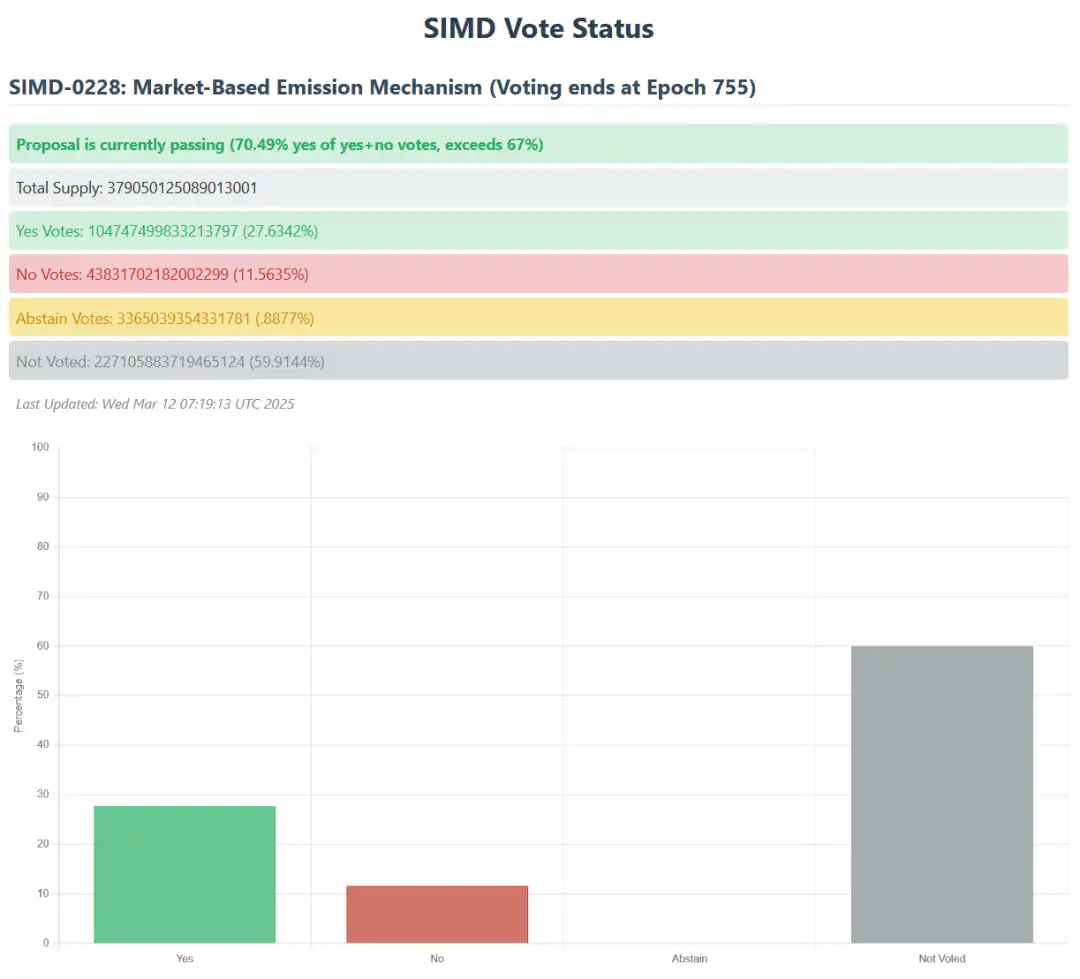
Currently, SIMD-0228 is under a vote, and the vote count has exceeded 33%, reaching the required quorum. The current approval rate has exceeded 70%, and the vote will continue until Epoch 755. If successfully passed, it will provide a "dynamic inflation" reference paradigm for other public chains. Even if it does not succeed, this governance dispute has profoundly altered the narrative of Web3: The future of blockchain economics lies in the delicate balance between code rules and human incentives, and Solana is undoubtedly leading the industry's development.
You may also like

Why does OKX want to start a new company with the parent company of the New York Stock Exchange?

The interim executive director of the Ethereum Foundation speaks out: What is our mission?

Standard Chartered Bank sings a 50x rhapsody again, aiming for AAVE to reach 3500 USD
Tidal Investment: We still have a positive outlook on the AI industry chain, but the reasons have changed

Former SpaceX engineer reconstructs the financial execution system using first principles

Why Is PAXG Price Different From Gold? 5 Reasons Crypto Traders Should Know

The cryptocurrency industry has entered the "Show Me" era: merely relying on vision is no longer enough

WEEX OpenAPI 101: 5 Powerful Modules, AI Trading Tools, and Grab Up to 70% Revenue Opportunities
Learn how WEEX OpenAPI connects traders, developers, AI agents, and trading platforms. Discover WEEX API features, Binance-compatible integration, automated trading workflows, revenue opportunities, and ecosystem possibilities.

Morning News | The draft amendment to the People's Bank of China Law aims to clarify the legal status of digital renminbi; South Korea will transfer about 40 unregistered virtual asset service providers to law enforcement agencies

Interpreting the Ethereum Foundation's new structure: Reaffirming self-sovereignty amid institutional trends

Interview with NDV Founder Jason Huang: Popping the AI Bubble and the Myth of Microstrategy, Seeking the Ultimate Ace in the Crypto Market
Morning Report | Former Ethereum Foundation researcher establishes Ethlabs; EU Parliament Economic Committee passes digital euro regulatory proposal

Dragonfly partner Haseeb: The fastest-growing companies in the future may all be stuck at 149 people

How xBubble Breaks the Deadlock in VC's Heavy Investment in the OPC Economy

The encrypted unicorn Blockstream is deeply embroiled in a serious fraud case

Morning Report | The South Korean Financial Services Commission plans to expand the regulatory sandbox to include virtual assets; the parent company of the New York Stock Exchange, ICE, has reached a partnership with OKX to jointly establish a cryptocu...

Exclusive Interview with Strategy CEO: Putting Aside the Sale of 32 BTC, the 60 Trillion AI Intelligence is the Ultimate Fate of Bitcoin

TRON revitalizes the image of the bull, creating a more approachable brand character
Why does OKX want to start a new company with the parent company of the New York Stock Exchange?
The interim executive director of the Ethereum Foundation speaks out: What is our mission?
Standard Chartered Bank sings a 50x rhapsody again, aiming for AAVE to reach 3500 USD
Tidal Investment: We still have a positive outlook on the AI industry chain, but the reasons have changed
Former SpaceX engineer reconstructs the financial execution system using first principles
Why Is PAXG Price Different From Gold? 5 Reasons Crypto Traders Should Know


