
 Buy Crypto
- Markets
 Futures
- Spot
- Copy Trade
- Earn
- More
Is a Stablecoin Considered Cash? Accounting Standards for Stablecoins May Be Adjusted Post-Genius Bill

Original Title: Accounting Rulemaker to Delve Into Crypto in 2026 Amid Trump Push
Original Author: Mark Maurer, THE WALL STREET JOURNAL
Original Translation: Ismay, BlockBeats
Editor's Note: The U.S. Financial Accounting Standards Board plans to include "whether stablecoins can be considered cash equivalents" and "how to account for the transfer of crypto assets" in its 2026 agenda. While these may seem like technical accounting issues, behind them lies the tug-of-war among regulation, politics, and the capital markets to legitimize crypto assets: on one side, the Genius Act is pushing stablecoins into mainstream institutional processes, while on the other, GAAP still has many gray areas—especially regarding when assets should be "derecognized" and how to define cross-chain and wrapped tokens, leading to inconsistencies in corporate financial reporting.
For investors, the true significance of this discussion is not just "whether it can be considered cash," but rather risk disclosure, transparency, and comparability: as stablecoins become more like cash and financial products, financial statements must provide clearer boundaries.
The following is the original content:
The U.S. Financial Accounting Standards Board (FASB) has stated that it will research two crypto-related topics in 2026: whether certain crypto assets may be classified as "cash equivalents" and how to account for the transfer of crypto assets. Against the backdrop of increased support for such investments by the Trump administration, these issues will be discussed.
In recent months, the FASB added these two crypto projects to its agenda based on public feedback. These issues are among the earliest batch of over 70 topics that FASB is considering for inclusion in its agenda; some of these topics may develop into new accounting standards in the future.
FASB has stated that it expects to decide on the prioritization of these over 70 potential topics by the end of this summer. These topics originated from an agenda consultation, where entities such as businesses and investors could submit letters outlining which matters they would like FASB to address first.
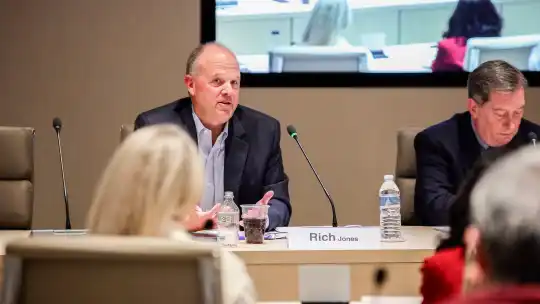
"Many people have invested significant time and effort in helping us shape our agenda," said Chair Rich Jones. "I see 2026 as a year to translate these views into action and fulfill our commitments."
In October last year, FASB added the issue of "Cash Equivalents" to its agenda, with a focus on certain stablecoins—assets that are usually pegged to a fiat currency.
This move came as former President Trump signed a stablecoin regulation bill into law three months earlier. The bill established a regulatory framework for stablecoins, further bringing these assets into the mainstream financial system. Jones noted that the bill, known as the "Genius Act," did not address the accounting significance of "what can be considered a cash equivalent." He also emphasized: "Telling people what doesn't meet the cash equivalent standard is as important as telling people what does."
Former President Trump himself and his family have interests in the crypto company World Liberty Financial; he introduced a series of policies supporting the crypto industry and halted previous regulatory crackdowns on the industry.
In November last year, FASB voted to study the accounting treatment of corporate transfers involving crypto assets, including "wrapped tokens"—tokens that allow crypto assets on one blockchain to be represented and used on another chain through "mapping."
The project will be based on a requirement FASB proposed for 2023: companies to measure Bitcoin and other crypto assets at fair value. This rule filled a gap in the Generally Accepted Accounting Principles (GAAP) in the U.S., but it did not cover non-fungible tokens (NFTs) and certain stablecoins.
While accounting requirements related to crypto have been proposed for 2023, some still find the specific details unclear.
Scott Ehrlich, Managing Director of the accounting training and consulting firm Mind the GAAP, said: "I still believe that there is a significant gap in GAAP on a key issue: when exactly should we remove crypto assets from the balance sheet, that is, derecognize them; and when should we not do so."
Both projects follow recommendations made by a working group set up by former President Trump to support the crypto industry and also respond to public feedback. Jones stated that these recommendations aligned with some viewpoints that certain FASB stakeholders originally held.
Jones said he did not feel pressured to adopt the working group's recommendations.
“I'm certainly pleased that they believe the way to address the accounting issue is to have these topics proposed to FASB for evaluation,” Jones said. “They didn't recommend pushing legislation to address accounting issues, nor did they suggest having the SEC come out and make statements to set the tone for accounting treatment.”
The SEC is responsible for enforcing the accounting standards set by the FASB for publicly traded companies.
This securities regulator also closely monitors any adjustments made by the FASB. Kurt Hohl, Chief Accountant of the SEC, stated earlier this month at a meeting: "There are a host of issues in the crypto space. The challenge is that they don't neatly fit into the existing accounting standard framework."
Legislators and investors occasionally express concerns about the FASB's standard-setting process. Recently, the organization came under scrutiny from House Republicans in the U.S., suggesting that if the FASB does not withdraw the upcoming tax disclosure requirement, its funding should be frozen. Under the new requirement, publicly traded companies are preparing to disclose more details about their income tax payments to government agencies in their 2025 annual reports.
Some observers question whether the ownership of crypto assets has become widespread enough to enter the FASB's agenda. Companies that include Bitcoin on their balance sheets are still in the minority, such as Tesla, Block, and Strategy.
"These new crypto initiatives don't seem to be driven by either widespread adoption or other established FASB project criteria, but more by current political priorities," said Sandy Peters, Head of Financial Reporting Policy Team at the CFA Institute, representing investment professionals.
However, with the enactment of the "Genius Act" in 2027, the newly established regulatory guardrails are expected to reduce the volatility of stablecoins, and market interest in stablecoins is expected to increase. Peters stated that without more comprehensive risk disclosures, investors are unlikely to accept stablecoins as cash equivalents.
As FASB Chairman, Jones is also facing a "countdown." His seven-year term is expected to end in June 2027, with the selection of his successor set to begin in early 2026.
Jones said that in the remaining approximately 18 months, he hopes the committee will be able to initiate and conclude an accounting standard on how to differentiate between "liabilities" and "equity." This determination is particularly complex for certain instruments like stock options, with both businesses and auditing firms finding it challenging.
Jones stated that this project is not officially on the agenda yet, but it still has a chance to be completed within the mentioned timeframe, as the committee can opt for "targeted improvements" rather than establishing an entirely new model. "I really hope to get it done before I step down," he said.
You may also like

After two years, Hong Kong's first batch of stablecoin licenses finally issued: HSBC, Standard Chartered make the cut

The person who helped TAO rise by 90% has now single-handedly crashed the price again today

3-Minute Guide to Participating in the SpaceX IPO on Bitget

Top 5 Cryptos to Buy in 2026 Q1: A ChatGPT Deep Dive Analysis
Explore the top 5 cryptos to buy in Q1 2026 including BTC, ETH, SOL, TAO, and ONDO. See price outlooks, key narratives, and institutional catalysts shaping the next market move.

How to Earn $15,000 with Idle USDT Before Altcoin Season 2026
Wondering if altcoin season is coming in 2026? Get the latest market update, and learn how to turn your idle stablecoins waiting for entry into extra rewards up to 15,000 USDT.
Can You Win Joker Returns Without Large Trading Volume? 5 Mistakes New Players Make In WEEX Joker Returns Season 2
Can small traders win WEEX Joker Returns 2026 without huge volume? Yes—if you avoid these 5 costly mistakes. Learn how to maximize card draws, use Jokers wisely, and turn small deposits into 15,000 USDT rewards.

Altcoin Season 2026: 4 Stages to Profit (Before the Crowd FOMO In)
Altcoin Season 2026 is starting — discover the 4 key stages of capital rotation (from ETH to PEPE) and how to position before the peak. Learn which tokens will lead each phase and avoid missing the rally.

Will Alt season come in 2026? 5 Tips to Spot the Next 100x Crypto Opportunities
Will altcoin season arrive in 2026? Discover 5 rotation stages, early signals smart traders watch, and the key crypto sectors where the next 100x altcoin opportunities may emerge.

The bear market has arrived, and cryptocurrency ETF issuers are also getting involved

The richest man had a quarrel with his former boss

BTC Firm Above 70K! Saylor’s "Institutional Logic" vs. Moon’s "Retail Faith": Who is Really Harvesting the Market?
Bitcoin is holding firm above the $70,000 support level following a massive short squeeze that liquidated $427 million. As the "Four-Year Cycle" narrative shifts, the market is split: Michael Saylor’s cold, institutional "indiscriminate stacking" vs. Carl Moon’s high-energy retail "hopium." This article decodes these two polar-opposite strategies for the 2026 bull run and reveals how WEEX’s institutional-grade liquidity and AI trading tools empower every type of investor to convert market volatility into profit.

The Girl Who Created the SBTI Test: A Story of a Doomed Cyber Love, an E-Widow Ratfolk

B.AI Officially Launched: Building AI Agent Financial Bedrock Platform, Driving AGI Era Business Underlying Logic

B.AI Officially Launched: Breaking Down A2A Collaboration Barriers to Unlock the Smart Body Economy's Full Potential
We helped Xu Mingxing write a book called "<OK Life>".

Rare APY of 400%, is TradeXYZ handing out money to oil bulls?
a16z: Perpetual Contracts are Rewriting Global Trading Rules

Bitcoin Hits $73,000 Triggering $427M Short Liquidation | Carl Moon: $200,000 is the Target
April 9, 2026 (UTC+0), 22:17. Bitcoin (BTC) executed a high-velocity surge within minutes, heavy-hitting the $73,000 psychological barrier and touching a local high near $74,000. While the price has since retraced to consolidate above $72,000, this "instant ambush" successfully completed a $427M liquidation of short positions.
After two years, Hong Kong's first batch of stablecoin licenses finally issued: HSBC, Standard Chartered make the cut
The person who helped TAO rise by 90% has now single-handedly crashed the price again today
3-Minute Guide to Participating in the SpaceX IPO on Bitget
Top 5 Cryptos to Buy in 2026 Q1: A ChatGPT Deep Dive Analysis
Explore the top 5 cryptos to buy in Q1 2026 including BTC, ETH, SOL, TAO, and ONDO. See price outlooks, key narratives, and institutional catalysts shaping the next market move.
How to Earn $15,000 with Idle USDT Before Altcoin Season 2026
Wondering if altcoin season is coming in 2026? Get the latest market update, and learn how to turn your idle stablecoins waiting for entry into extra rewards up to 15,000 USDT.
Can You Win Joker Returns Without Large Trading Volume? 5 Mistakes New Players Make In WEEX Joker Returns Season 2
Can small traders win WEEX Joker Returns 2026 without huge volume? Yes—if you avoid these 5 costly mistakes. Learn how to maximize card draws, use Jokers wisely, and turn small deposits into 15,000 USDT rewards.


 App
App